Toyota Rush Price in Kenya | Specs, Import Costs and Fuel Consumption
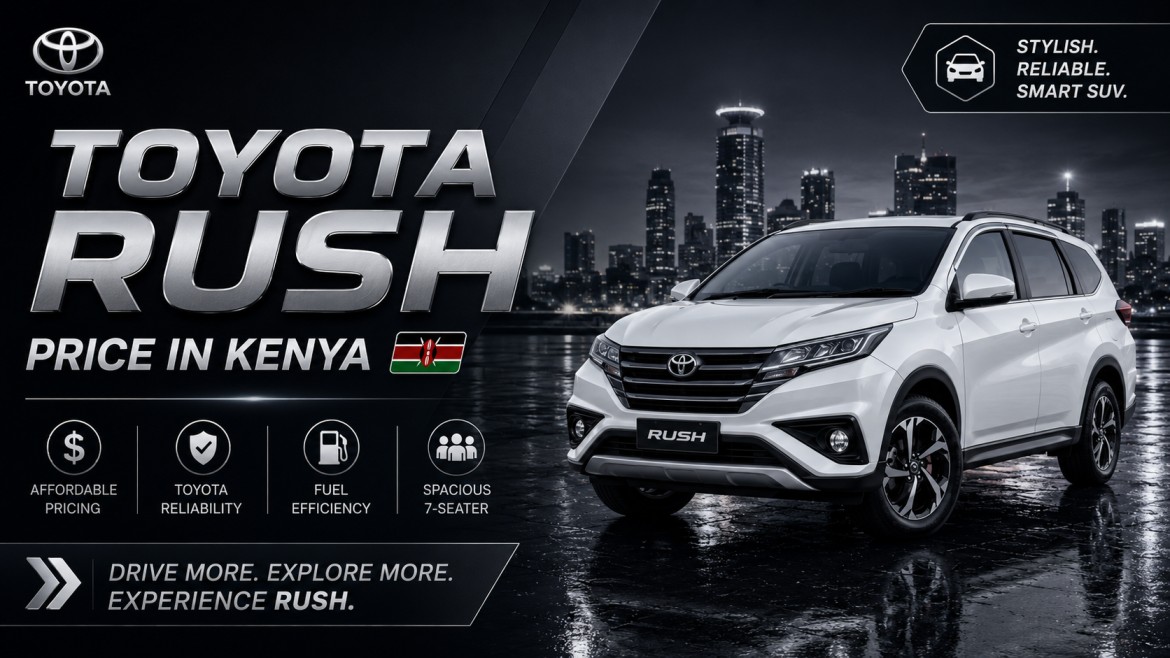
The Toyota Rush is one of the most searched cars in Kenya right now. And the number one question every buyer asks is the same. How much does it cost?
Having worked in the Kenyan car market since 2009 and being a proud KCCI award winning dealership, Khushi motors have seen this market from every angle. We have helped thousands of Kenyan families buy the right car without overpaying. So when Khushi motors talk about prices here, it comes from real experience, not guesswork.
A used Toyota Rush currently starts from around Ksh 650,000 for a 2006 or 2007 model. A cleaner 2015 to 2018 unit sits between Ksh 1,500,000 and Ksh 2,350,000. A 2019 or newer model will cost Ksh 4,000,000 and above.
This guide covers the full price breakdown by year, the real cost of importing one from Japan, actual fuel consumption on Kenyan roads, which year model gives the best value, and an honest comparison with other SUVs in the same budget. Everything here is based on what is actually happening in the Kenyan market today. You can also browse our full used car inventory to see what is currently available.
Toyota Rush Price in Kenya by Year Model
One of the biggest mistakes buyers make is looking at one price and thinking that is what every Rush costs. The truth is the price changes quite a bit depending on the year, mileage and condition. Here is a clear breakdown based on actual listings in the Kenyan market right now.
| Year Model | Condition | Price Range (Ksh) |
| 2006 to 2008 | Locally Used | 650,000 to 900,000 |
| 2009 to 2011 | Locally Used | 900,000 to 1,150,000 |
| 2012 to 2014 | Locally Used | 1,150,000 to 1,590,000 |
| 2015 to 2018 | Locally Used | 1,690,000 to 2,350,000 |
| 2018 to 2020 | Foreign Used | 2,500,000 to 3,500,000 |
| 2021 and Above | Foreign Used or New | 4,000,000 and above |
Beyond the year, two things affect the price more than anything else. Mileage and accident history. A 2014 model with 60,000 km will cost noticeably more than the same year with 130,000 km on the clock. A car that has been in a serious accident, even if repaired well, will always carry that risk. Always ask for the full vehicle history before you pay anything.
Which Toyota Rush Year Model is the Best to Buy?
This is something buyers ask every week. After years of seeing which cars give the least headaches, the answer is quite consistent.
The 2014 to 2016 models are the sweet spot. They are new enough to be in good mechanical condition. They are old enough to sit in a budget most buyers can realistically manage, usually between Ksh 1,500,000 and Ksh 2,000,000. Spare parts for these years are easy to find across Nairobi, Mombasa and Kisumu. And when it is time to sell, the resale value holds up well compared to most other SUVs in the same price range.
If your budget is tighter, the 2009 to 2012 models are still very dependable. The engine from those years is mechanically simple. Any experienced mechanic in Kenya can service it without specialist equipment. Just make sure you do a proper inspection before buying and check the suspension, gearbox and chassis carefully.
Toyota Rush Full Specifications
Before committing to any car it helps to know exactly what you are getting. Here are the key specs of the Toyota Rush.
| Feature | Details |
| Engine | 1.5L 4 Cylinder Petrol (3SZ-VE) |
| Power Output | 102 to 104 horsepower |
| Torque | 134 to 136 Nm |
| Transmission | 4 Speed Automatic or 5 Speed Manual |
| Drive System | 2WD or Optional 4WD |
| Seating Capacity | 5 or 7 Seats |
| Ground Clearance | 218mm (8.6 inches) |
| Fuel Tank Capacity | 45 Litres |
| Boot Space | 127L (3rd row up) / 490L (3rd row folded) |
The 218mm ground clearance is one of the biggest reasons this car works so well in Kenya. Whether you are driving through Nairobi traffic, heading to Kisumu or navigating a rough murram road in the countryside, that ground clearance makes a real difference. Most crossovers in this price range sit at around 170mm to 180mm. The Rush gives you noticeably more confidence on bad roads.
Toyota Rush Fuel Consumption in Kenya
Fuel is one of the biggest ongoing costs of owning a car in Kenya. So it makes sense to understand what you are getting into before buying.
The Toyota Rush runs a 1.5L petrol engine which is genuinely reasonable for an SUV of this size. Here is what real world driving in Kenya actually looks like.
| Driving Condition | Fuel Consumption |
| City Driving (Nairobi Traffic) | 10 to 12 km per litre |
| Highway Driving | 14 to 16 km per litre |
| Mixed Driving | 13 to 14 km per litre |
To put that into practical numbers, a full 45 litre tank in city driving will take you roughly 450 to 540 kilometres before you need to refuel. On a highway trip like Nairobi to Mombasa, you will get even better mileage.
One thing worth knowing. The 2WD version uses noticeably less fuel than the 4WD version. If you are mostly driving in town and only occasionally go off road, the 2WD is the smarter choice for your running costs. Many buyers pay extra for 4WD capability and then almost never use it.
Cost of Importing a Toyota Rush from Japan to Kenya
Many buyers prefer to import directly from Japan to get a cleaner, lower mileage unit at a better price than what is available locally. Here is how the numbers actually break down.
Purchase and Shipping Cost from Japan
A Toyota Rush at a Japanese auction typically costs between $3,000 and $6,000 depending on the year and auction grade. Shipping from Japan to Mombasa adds roughly $800 to $1,200. So before Kenyan taxes, you are looking at around $3,800 to $7,200 landed at Mombasa port.
Kenya Import Taxes and Duties
KRA calculates import duty based on the Current Retail Selling Price (CRSP), the engine size and the age of the vehicle. As of July 2025, KRA updated the CRSP list which is now what all duty calculations are based on. Here is a simplified breakdown.
| Tax or Levy | Rate |
| Import Duty | 25% of Customs Value |
| Excise Duty | 35% for 1500cc petrol engine |
| VAT | 16% |
| IDF Fee | 3.5% |
| Railway Development Levy | 2% |
On top of KRA taxes, budget an additional Ksh 160,000 to Ksh 200,000 for port charges, SGR transport from Mombasa, verification fees, Interpol clearance and NTSA registration.
One critical point. As of 2026, Kenya only allows importation of vehicles that are not older than 8 years from the date of first registration. This means the oldest model you can legally import right now is a 2018 unit. Anything older must be bought locally.
You can explore our Japanese import options to see available stock and get a full landed cost estimate before making any decision.
Toyota Rush vs Rivals : Nissan, Honda, Suzuki
How does the Toyota Rush actually compare to other popular SUVs in the same price range in Kenya? Here is an honest side by side comparison based on what matters most for Kenyan buyers.
| Feature | Toyota Rush | Nissan Dualis | Honda CR-V | Suzuki Escudo |
| Engine Size | 1.5L | 2.0L | 2.0L | 1.6L |
| Fuel Consumption | 13 to 14 km/L | 11 to 12 km/L | 10 to 12 km/L | 12 to 13 km/L |
| Ground Clearance | 218mm | 170mm | 172mm | 200mm |
| Seating Capacity | 7 Seats | 5 Seats | 5 Seats | 5 Seats |
| Spare Parts Kenya | Very Easy | Easy | Moderate | Moderate |
| Price Range (Ksh) | 650K to 2.35M | 800K to 2.5M | 900K to 3M | 700K to 1.8M |
| Best For | Families, rough roads | City driving | Comfort and style | Budget off road |
The Toyota Rush wins clearly on ground clearance, seating capacity, fuel economy and spare parts availability. For a Kenyan family that needs a car to handle city roads during the week and rough terrain on weekends, nothing in this price range matches the Rush for overall practicality.
The Honda CR-V feels more premium inside and drives more smoothly on tarmac. But spare parts are harder to find outside Nairobi and more expensive when you do find them. The Nissan Dualis is a very capable city car but the lower ground clearance becomes a real problem the moment you leave tarmac. The Suzuki Escudo is a solid budget option but the 5 seat limit is a dealbreaker for larger families.
Is the Toyota Rush a Good Car to Buy in Kenya?
The short answer is yes. But here is the full honest picture so you can decide for yourself.
What Works Well
- Ground clearance of 218mm handles Kenyan roads better than most SUVs in this price bracket
- 7 seat configuration makes it genuinely practical for families
- Spare parts are affordable and available from most stockists across the country, not just in Nairobi
- The 3SZ-VE engine is mechanically simple and well understood by Kenyan mechanics everywhere
- Resale value is consistently strong because demand in the used car market never really drops
What to Keep in Mind
- The 4 speed automatic gearbox feels a little sluggish compared to newer CVT transmissions
- When the car is fully loaded with 7 passengers and luggage on a steep uphill road, the 1.5L engine works noticeably hard
- Third row seats are compact and tall adults will find them uncomfortable on long journeys
- Interior quality on older models feels basic compared to something like the Honda CR-V in the same price range
| Overall, for the price you are paying and the roads you will be driving in Kenya, the Toyota Rush delivers genuine value. Reliable, practical, affordable to run and easy to find parts for anywhere in the country. That combination is genuinely hard to beat. |
Toyota Rush Models Available at Khushi Motors
Khushi motors regularly stock a range of Toyota Rush models across different year models and price points at our Mombasa and Kisumu showrooms. Browse our current Toyota Rush listings to see live stock with photos, mileage, price and full condition details on every available unit.
Frequently Asked Questions
How much does a Toyota Rush cost in Kenya in 2026?
A used Toyota Rush starts from around Ksh 650,000 for older 2006 to 2008 models and goes up to Ksh 2,350,000 for a cleaner 2015 to 2018 unit. Newer 2019 and above models are priced at Ksh 4,000,000 and above depending on condition and trim level.
What is the Toyota Rush fuel consumption in Kenya?
In city driving the Toyota Rush returns around 10 to 12 kilometres per litre. On the highway it improves to 14 to 16 kilometres per litre. The 2WD version is more fuel efficient than the 4WD version, making it the better choice for buyers who drive mainly in town.
Is the Toyota Rush a good car to buy in Kenya?
Yes. The Toyota Rush has 218mm ground clearance which handles Kenyan roads very well, seats up to 7 people, and has spare parts that are affordable and easy to find across the country. The resale value is strong and the engine is simple to maintain. It is one of the most practical SUVs available in this price range in Kenya.
What is the cost of importing a Toyota Rush from Japan to Kenya?
The car at a Japanese auction costs between $3,000 and $6,000 with shipping adding $800 to $1,200. You then pay KRA taxes including import duty at 25%, excise duty at 35%, VAT at 16%, IDF fee and railway development levy. Budget an additional Ksh 160,000 to Ksh 200,000 for port and clearing charges. Note that only 2018 models and newer can be legally imported as of 2026.
Which Toyota Rush year model is the best to buy in Kenya?
The 2014 to 2016 models offer the best balance of price, condition and reliability for most Kenyan buyers. They sit in the Ksh 1,500,000 to Ksh 2,000,000 range with good mechanical condition and easily available spare parts. For tighter budgets the 2009 to 2012 models remain dependable and affordable to maintain.

David Mwangi
Senior Automotive Consultant
David Mwangi has over 10 years of experience in the automotive industry. He specializes in used vehicle evaluations, car buying advice and ownership guidance. His content helps buyers choose reliable vehicles based on budget, fuel economy and long-term maintenance costs.
Ready to Find Your Perfect Car?
Browse our extensive inventory of quality Japanese used cars or contact our team for personalized assistance.