Best Mileage for Used Cars in Kenya — The Honest Guide Every Buyer Needs Before They Spend a Shilling
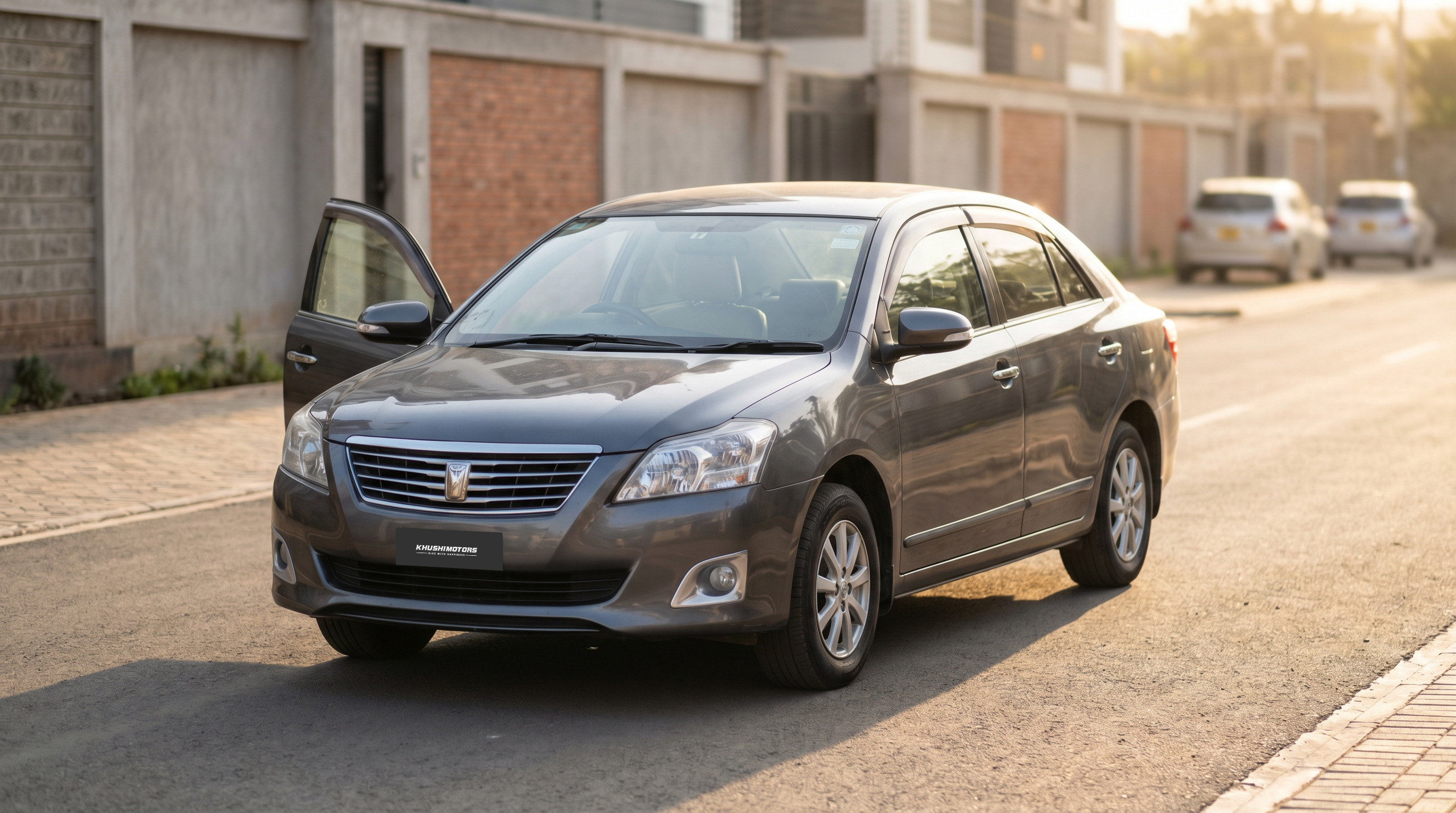
Every Kenyan used car buyer faces the same moment. You find a vehicle that looks right, the price feels fair, and then you see the odometer. 85,000 km. 130,000 km. 210,000 km. The number stares back at you and suddenly the confidence you felt two minutes ago has questions attached to it. Is this too much? What does this number actually mean for how long the car will serve me without draining my pocket?
The answer is more nuanced than any single number can carry. Mileage matters enormously in the used car decision, but mileage without context is just a number. A car with 80,000 km driven aggressively, poorly maintained, and never serviced on time can be in worse condition than a car with 150,000 km that has been serviced meticulously, driven mostly on highways, and stored correctly. Understanding what mileage actually tells you — and what it does not — is the knowledge that separates buyers who make great purchases from buyers who get expensive surprises three months after handover.
This guide gives you that understanding. What good mileage looks like in Kenya for every vehicle category. How to spot a tampered odometer. Why service history matters more than mileage in isolation. And how Khushi Motors protects every buyer from the mileage-related risks that make Kenya's used car market genuinely dangerous when approached without proper guidance.
"Mileage tells you how far a car has travelled. Service history tells you whether it survived the journey. A smart buyer reads both."
Why Mileage Matters — and Why It Does Not Tell the Whole Story
A car's engine, gearbox, suspension, and drivetrain all wear with use. Every kilometre puts mechanical stress on moving parts. Brake pads thin, tyres wear, timing chains stretch, seals dry, and fluids degrade. This is not a flaw in how cars are made. It is the nature of mechanical systems doing what they were designed to do, absorbing the energy of movement and converting it into progress rather than noise.
What mileage represents is an accumulation of that wear. At 50,000 km, a well-maintained Japanese compact car has barely begun its mechanical life. At 200,000 km, the same car may be in better condition than a European vehicle at 100,000 km that has been neglected, because the Japanese engineering tolerates wear more gracefully and the maintenance history has kept every component performing to spec. The mileage number is the starting point of the conversation, not the conclusion of it.
In Kenya's used car market, two additional factors complicate mileage as a metric. The first is odometer tampering. Rolling back odometers to present a vehicle with artificially low mileage is a documented and persistent fraud in the informal used car market. The second is that many vehicles imported from Japan arrive with Japanese domestic mileage figures that reflect genuinely different driving patterns — more city driving, shorter trips, more frequent servicing — which can make the same mileage figure mean something different to its life expectancy than the same number on a vehicle that has spent its life on Kenyan highways.
The Mileage Sweet Spot — What the Numbers Actually Mean in Kenya
Based on 15 years of sourcing and inspecting vehicles for Kenyan buyers across every category, Khushi Motors has developed clear mileage guidance that reflects the realities of the Kenyan market rather than generalised figures from other markets. Here is what different mileage bands mean in practice.
Under 30,000 km — Near-New, Premium Priced, Rare
Vehicles with under 30,000 km on the clock are functionally new. In the Japanese auction market, these units attract significant premiums because buyers worldwide understand that they represent vehicles in their earliest and most trouble-free phase of life. Brake pads, tyres, and fluid systems are largely untouched. The engine has not yet reached the point where wear is measurable in any meaningful way. In Kenya, these units are available but expensive — typically priced within 20 to 30 percent of a new equivalent. For buyers who want maximum peace of mind and are willing to pay for it, sub-30,000 km examples are worth considering seriously.
30,000 km to 70,000 km — The Ideal Sweet Spot
This is the range that Khushi Motors and Kenya's most experienced buyers consistently identify as the optimal used car mileage. The vehicle has been used enough for any manufacturing defects to have surfaced and been addressed under warranty, but not enough for significant mechanical wear to have accumulated. Service intervals will have required several oil changes, filter replacements, and minor maintenance, which means a properly maintained example in this range has a documented service history that a buyer can verify. Price-to-value is strongest here: a meaningful discount from new pricing alongside the most life remaining before major maintenance items come due.
70,000 km to 120,000 km — Good Value, Inspection Critical
The majority of used cars available in Kenya's market sit in this bracket, and this is where careful inspection separates good purchases from costly mistakes. At 70,000 to 100,000 km, most Japanese vehicles with proper maintenance histories are entering a phase where basic service items like brake pads, tyres, and spark plugs may need attention, but the major mechanical components — engine, gearbox, differential — are typically still in strong condition. Between 100,000 and 120,000 km, timing belts on some engines may be approaching service intervals, and suspension bushes, shock absorbers, and clutches on manual vehicles deserve specific attention during inspection.
120,000 km to 180,000 km — Value Territory, Knowledge Required
In this range, a buyer needs specific knowledge about the vehicle model and its known maintenance requirements at this mileage. Japanese vehicles — Toyota, Honda, Subaru, Nissan — are typically still dependable in this range when service history is documented and consistent. European vehicles in this range require more careful evaluation because their maintenance costs at this mileage tend to be higher and their tolerance for deferred servicing is lower. This bracket offers the most attractive prices in the used market, but the inspection process must be correspondingly more thorough.
Over 180,000 km — High Mileage, Managed Risk
High mileage vehicles in Kenya can represent excellent value when the specific model is known for longevity, the service history is impeccable, and the inspection covers all the components that wear over extended use. Toyota Land Cruisers with 250,000 km and documented maintenance histories continue to command strong prices in Kenya because buyers understand that the model's engineering tolerates high mileage gracefully. The same cannot be said for every vehicle. High mileage is not automatically disqualifying, but it requires a more experienced eye and a more comprehensive inspection process than lower mileage alternatives.
Ideal Mileage by Vehicle Category — Kenya-Specific Guidance
Different vehicle categories have different mileage tolerances based on their engineering, typical use patterns, and maintenance requirements. Here is the practical guidance that Khushi Motors applies when sourcing vehicles for Kenyan buyers.
Hatchbacks and Small Sedans: Under 80,000 km preferred — Toyota Auris, Honda Fit, Mazda Demio — Japanese hatchbacks tolerate more but 80K keeps buyers in the sweet spot
Mid-Size Sedans: Under 100,000 km — Toyota Allion, Premio, Nissan Sylphy — 60K to 100K is optimal for daily executive use
Compact SUVs and Crossovers: Under 80,000 km — Toyota Harrier, Mazda CX-5 — lower mileage matters more for suspension and CVT transmission longevity
Full-Size SUVs: Under 120,000 km — Lexus LX570, Toyota Land Cruiser — built for longevity, 100K with service history is strong
Luxury Sedans: Under 80,000 km strongly preferred — Mercedes S-Class, BMW 5 Series — electronics and air suspension demand lower mileage for reliability
Luxury SUVs: Under 100,000 km — Range Rover, Porsche Cayenne — air suspension components and electronics warrant careful inspection above 80K
Pickup Trucks: Under 150,000 km acceptable — Toyota Hilux, Nissan Navara — built for working life, service history matters more than mileage at this level
Commercial Vehicles: Depends on service history — HiAce, Caravan — inspect engine, transmission, and body condition independently of mileage figure
Odometer Fraud in Kenya — How to Protect Yourself
Odometer tampering is one of the most serious risks in Kenya's informal used car market. Sellers who roll back an odometer from 180,000 km to 80,000 km can command an additional KSh 500,000 to KSh 1,500,000 on the asking price of a popular model, which makes the fraud financially worth the risk for dishonest sellers. The consequences for buyers who unknowingly purchase a tampered vehicle are severe: the car is already past major maintenance milestones that the buyer believes are still years away, and the mechanical wear the odometer was supposed to document has been hidden.
How to Identify a Tampered Odometer
Several physical and documentary checks can identify inconsistency between recorded mileage and actual wear. None of them requires specialist equipment. They require attention and a willingness to look carefully.
- Wear inconsistency. A vehicle with 60,000 km recorded should have correspondingly modest wear on the steering wheel, driver's seat bolster, gear lever, brake pedal rubber, and door grab handles. If these components show heavy wear inconsistent with the recorded mileage, the odometer has been manipulated.
- Tyre condition. At 60,000 km, original tyres may still be present. At 120,000 km, they will have been replaced. Original tyres on a vehicle with suspiciously low recorded mileage, but tyres that are clearly not original, signal a problem.
- Service stickers. Many vehicles carry service stickers in the door jamb or under the bonnet from previous oil changes, with dates and mileages recorded by the workshop. A sticker showing a higher mileage than the current odometer reading is conclusive evidence of tampering.
- Auction sheet verification. Vehicles sourced from Japanese auction markets carry auction sheets that record the vehicle's condition grade and mileage at the time of auction. These documents cannot be retroactively altered and provide the most reliable external mileage verification available for Japanese imports.
- Electronic diagnostic scan. Modern vehicles store mileage data in multiple electronic control modules. A diagnostic scan reads this stored data and compares it with the odometer display. Tampering with the physical odometer without updating all electronic modules leaves detectable inconsistencies.
At Khushi Motors, every vehicle sourced from Japanese auction markets comes with a documented auction sheet providing verified mileage at the time of auction. All vehicles go through a comprehensive multi-point inspection that includes physical wear assessment consistent with recorded mileage and an electronic diagnostic scan of all control modules. This process is described in full in the complete buying guide.
Service History Matters More Than Mileage — Here Is Why
The most important document associated with any used car is not the logbook. It is the service history. A vehicle's service history tells you how consistently its engine oil has been changed, when its filters were replaced, whether its timing belt was serviced at the correct interval, when brakes and tyres were attended to, and whether the vehicle has been maintained by someone who cared about its long-term health or someone who drove it until something broke.
A Toyota Land Cruiser with 200,000 km and a complete dealer-stamped service history from every 10,000 km interval is a fundamentally more reliable purchase than the same model with 80,000 km and no service documentation, because the 200,000 km vehicle has proven across its entire life that its systems have been properly maintained. The 80,000 km vehicle without history could have been oil-changed once in its life or subjected to abuse that the service book cannot contradict because it was never filled in.
When evaluating a used car in Kenya, insist on seeing the physical service book or any available service documentation. Ask specifically about timing belt or timing chain service intervals and whether these have been performed. Ask about any major repairs. A seller who cannot answer these questions or who becomes evasive when asked has told you something important about what the vehicle's history actually contains.
"A car with perfect service history and higher mileage will outlast a car with low mileage and no history. Every time. Without exception."
Age Versus Mileage — Which One Should You Prioritise?
This is a question that divides experienced buyers in Kenya and the answer depends on how the vehicle was used during its life. As a general principle for the Kenyan market, mileage is a more reliable indicator of mechanical wear than age for Japanese vehicles. A 2015 Toyota with 120,000 km on a documented service history is typically in better mechanical condition than a 2018 Toyota with 60,000 km and no service records, because the 2015 vehicle's documented maintenance has kept its components performing correctly throughout its higher-use life.
Age becomes the dominant concern primarily through two mechanisms: rubber degradation and electronic component aging. Rubber seals, hoses, and suspension bushes degrade with time even if a vehicle is barely driven. A 2010 vehicle with only 40,000 km may have pristine mechanical components but rubber systems that are cracking and failing simply because of their age. Electronic components in luxury vehicles also develop age-related faults that are independent of mileage. A 2012 Range Rover with 50,000 km is not necessarily a safer purchase than a 2016 Range Rover with 90,000 km, because the older vehicle's air suspension, electronics, and rubber systems will be 14 years old regardless of how few kilometres they have covered.
The practical guidance Khushi Motors applies: for Japanese vehicles under 10 years old, mileage and service history are the primary factors. For Japanese vehicles over 10 years old and European vehicles of any age, both mileage and age deserve equal weight in the inspection and valuation process.
Why Khushi Motors Is the Safest Place to Buy a Used Car in Kenya
The mileage and inspection knowledge in this guide exists because Khushi Motors has applied it, tested it, and refined it across 15 years and over 100,000 vehicle transactions. Every vehicle that Khushi Motors sources for East African buyers goes through a rigorous multi-point inspection that specifically addresses every mileage-related concern this guide has raised: physical wear assessment, auction sheet verification, electronic module scanning, service history review, and suspension and drivetrain condition checks appropriate to the recorded mileage. The full inspection report is provided to every buyer before any commitment is made. Khushi Motors' award-winning recognition — the 2026 IAUC International Automobile Certification, the 2023 KNCCI Best Car Dealer Award, the 2025 Best Car Dealer in Mombasa Award, and the 2022 NCBA Affiliate recognition — confirms the standard that 100,000 buyers have already experienced firsthand.
Buyers who want to understand exactly what is verified at every stage can review the complete step-by-step buying guide. For buyers who need financing, structured car finance options are available including bank loans, SACCO financing, and hire purchase plans with a 4.8 out of 5 satisfaction rating from over 2,600 customers. Browse the full vehicle inventory by body type, price range, and make to find the right vehicle at the right mileage for your specific needs.
Khushi Motors — Visit Our Kenya Showrooms:
Mombasa (Flagship): Dedan Kimathi Avenue, Mikindani Road, Mombasa
+254 714 888111 (Mr. Akil) | +254 111 777000 (Mr. Waqas) | sales@khushimotors.com
Kisumu: Near Kachok Roundabout, Nairobi Highway, Kisumu
+254 110 222999 | sales.kisumu@khushimotors.com
Kampala, Uganda: Ntinda Road | +256 708 305 555 | sales.uganda@khushimotors.com
Dar es Salaam, Tanzania: Ursino, Mwaikibaki Road | +255 765 315555 | sales.tanzania@khushimotors.com
Open Monday to Saturday, 8:00 AM to 6:00 PM | Maps: https://khushimotors.com/locations
"The right mileage is the one that comes with the right service history, the right inspection, and the right dealer. Khushi Motors makes sure all three arrive together."
5 Questions Kenyan Buyers Ask About Used Car Mileage
1. What is a good mileage for a used car in Kenya?
For most Kenyan buyers, 30,000 km to 80,000 km represents the optimal used car mileage — low enough that significant mechanical wear has not accumulated, high enough to have absorbed the new-car price premium. For practical daily drivers like the Toyota Auris, Honda Fit, or Nissan Sylphy, up to 100,000 km with a clean service history is a strong buy. For SUVs and luxury vehicles, staying under 80,000 km is advisable. Browse the full Khushi Motors inventory filtered by body type and price to identify vehicles in your preferred mileage range.
2. Is 150,000 km too much for a used car in Kenya?
Not automatically — it depends entirely on the model, the service history, and the inspection results. A Toyota Land Cruiser or Toyota Hilux with 150,000 km and a documented service history is a different proposition from a European luxury vehicle at the same mileage without service records. Japanese workhorses built for high-mileage reliability can serve for another 100,000 km or more when properly maintained. European vehicles at 150,000 km require significantly more thorough inspection and carry higher maintenance uncertainty regardless of service history. The model matters as much as the number.
3. How do I know if a used car's mileage has been tampered with in Kenya?
Check for physical wear inconsistency with the recorded mileage. Look for service stickers in the door jamb or under the bonnet that show higher mileage than the odometer. Request the auction sheet for Japanese imports, which provides independent mileage verification. Insist on an electronic diagnostic scan of all control modules, which stores mileage data that cannot be altered by tampering with only the physical odometer display. At Khushi Motors, all of these checks are performed as standard before any vehicle reaches a buyer. The buying guide details every verification step.
4. Should I prioritise a newer car with higher mileage or an older car with lower mileage?
For Japanese vehicles under 10 years old, a newer car with higher mileage and a documented service history is generally the stronger choice. The newer platform will have more current technology, more recent rubber and electronic components, and better safety features. An older car with low mileage may have degraded rubber seals, aging electronics, and components that have sat unused long enough to develop their own problems. For European vehicles, age and mileage both deserve equal consideration because electronic complexity and rubber-intensive systems make age a more significant factor than it is for simpler Japanese engineering.
5. Why does buying from Khushi Motors protect me from mileage fraud?
Khushi Motors sources vehicles exclusively from verified international auction markets, where auction sheets provide independent mileage documentation that cannot be retroactively altered. Every vehicle goes through a comprehensive inspection that includes physical wear assessment against recorded mileage and an electronic diagnostic scan to identify any inconsistency between stored module data and odometer display. All findings are documented in a full condition report provided to every buyer before any commitment is made. This process has been applied consistently across 100,000 vehicles over 15 years, and its reliability is confirmed by four independent industry awards. Contact the team through the enquiry page to discuss any specific vehicle or mileage question.

Peter Kamau
Vehicle Inspection & Quality Specialist
Peter has extensive experience inspecting imported vehicles before sale. His content focuses on vehicle condition assessment, maintenance practices, inspection checklists, and identifying reliable cars.
Ready to Find Your Perfect Car?
Browse our extensive inventory of quality Japanese used cars or contact our team for personalized assistance.