Nissan Note Fuel Consumption in Kenya: Everything You Need to Know Before Buying
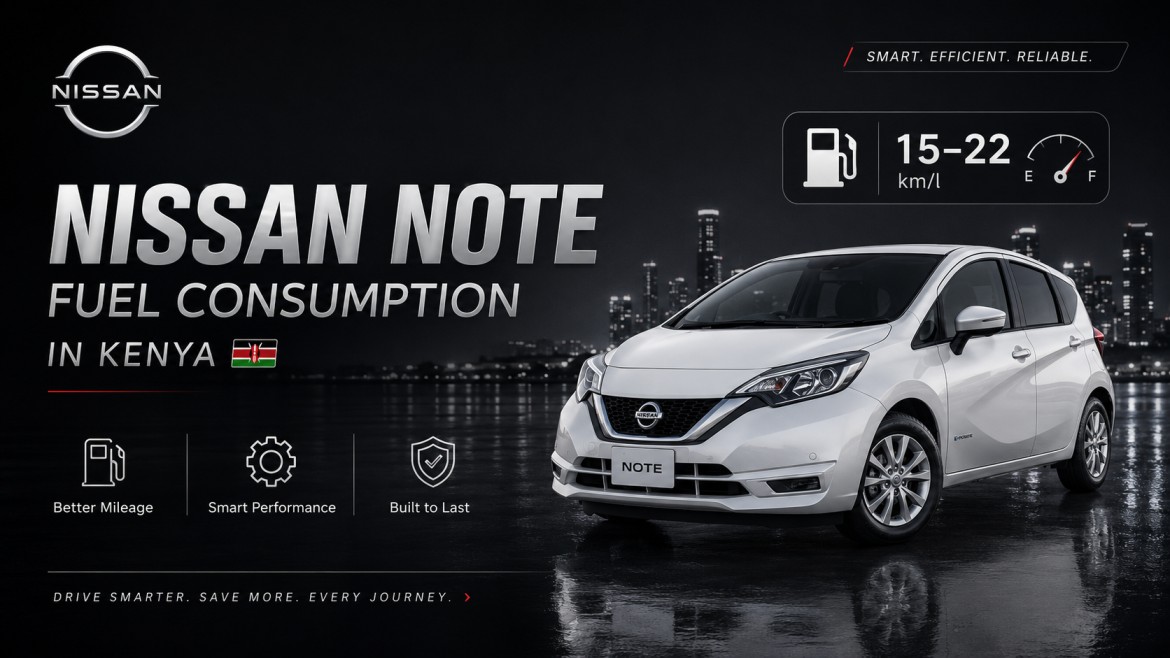
If you are looking for a fuel efficient car that does not burn a hole in your pocket, the Nissan Note should be at the top of your list. In real world Kenyan driving conditions in 2026, the Nissan Note consumes around 5.5 to 6.5 litres per 100km. On open highways that number can drop to as low as 5.2 litres per 100km which is excellent for a family hatchback.
Khushi Motors have been helping Kenyan families find reliable cars since 2009 and as proud KCCI award winners we know exactly how the Nissan Note performs on local roads. This guide covers everything including full specs, real world fuel numbers, weaknesses, a competitor comparison, and how to import one straight from Japan.
Nissan Note at a Glance
The Nissan Note is a compact hatchback that has been a favourite in Kenya for over a decade. It is practical, easy to drive, and very cheap to run. In 2026 two main generations are still actively traded in the Kenyan used car market.
| Generation | Years | Popular Engine | Market Status in 2026 |
| E11 | 2005 to 2012 | 1.4L and 1.6L petrol | Still available but aging out |
| E12 | 2012 to 2020 | 1.2L petrol and e-Power | Most popular choice in 2026 |
The E12 generation is what most buyers are going for in 2026. It looks modern, delivers better fuel economy, and spare parts are widely available across Nairobi, Mombasa, and other major towns. The e-Power hybrid variant is becoming increasingly popular as fuel prices in Kenya continue to rise.
Full Specifications of Nissan Note
Here is a complete breakdown of the Nissan Note specs across all major variants available in Kenya in 2026.
| Feature | E11 1.6L | E12 1.2L Petrol | E12 e-Power |
| Engine Size | 1.6L 4 cylinder | 1.2L 3 cylinder | 1.2L petrol + Electric Motor |
| Power Output | 110 hp | 79 hp | 109 hp via electric motor |
| Torque | 153 Nm | 110 Nm | 254 Nm |
| Transmission | CVT or 5 speed manual | CVT | Single speed reduction gear |
| Drivetrain | Front wheel drive | Front wheel drive | Front wheel drive |
| Fuel Type | Petrol | Petrol | Petrol charged hybrid |
| Fuel Tank | 41 litres | 41 litres | 41 litres |
| Official Economy | 13.2 km per litre | 20.4 km per litre | 34.0 km per litre |
| Seating | 5 | 5 | 5 |
| Boot Space | 210 litres | 210 litres | 199 litres |
| Length | 4080 mm | 4100 mm | 4100 mm |
| Width | 1695 mm | 1695 mm | 1695 mm |
| Height | 1535 mm | 1525 mm | 1525 mm |
| Wheelbase | 2600 mm | 2600 mm | 2600 mm |
| Ground Clearance | 150 mm | 150 mm | 150 mm |
| Kerb Weight | 1075 kg | 1010 kg | 1210 kg |
| Safety Rating | 4 star JNCAP | 5 star JNCAP | 5 star JNCAP |
The e-Power system is unique because the petrol engine never directly drives the wheels. It only acts as a generator to charge the battery. The electric motor does all the driving. This is why the e-Power delivers fuel economy figures that are almost double a regular petrol car.
Nissan Note Fuel Consumption in 2026: Real World Numbers
This is what every buyer really wants to know. Official Nissan figures are tested under perfect lab conditions. What actually happens on Kenyan roads is a completely different story. Here are honest real world figures based on actual driver feedback and our hands on experience at Khushi Motors over the years.
| Driving Condition | E11 1.6L | E12 1.2L Petrol | E12 e-Power |
| Nairobi City Traffic | 8 to 10L per 100km | 6 to 7L per 100km | 3.5 to 4.5L per 100km |
| Highway Driving | 6 to 7L per 100km | 5 to 5.5L per 100km | 2.5 to 3.5L per 100km |
| Mixed Driving | 7 to 8L per 100km | 5.5 to 6.5L per 100km | 3 to 4L per 100km |
| Monthly Fuel Cost (est.) | KES 12,000 to 16,000 | KES 8,500 to 11,000 | KES 5,000 to 7,500 |
Monthly fuel cost estimates are based on approximately 1,500km driven per month at the current average Kenyan petrol price of KES 200+ per litre as of 2026.
Now a lot of buyers ask us whether 5.7 litres per 100km is actually good or just average. Honestly, it is very good. Think about it this way. With petrol at KES 200+ per litre right now, doing 5.7L per 100km means you are spending roughly KES 11,300 for every 1,500km you drive. Most cars in this size and price range are burning 7 to 8 litres for the same distance which costs you between KES 13,000 and KES 15,000.
People also ask us about the 1.5L engine comparison because some buyers come in thinking the Nissan Note has a 1.5L engine. It does not. The E12 runs a 1.2L three cylinder engine which sounds small but actually performs very well on Kenyan roads. A regular 1.5L petrol engine in a car like the Toyota Axio will typically use between 6.5 and 7.5 litres per 100km in mixed conditions. The Note's 1.2L beats that comfortably while also costing less to buy in the first place. That combination of lower purchase price and lower running cost is exactly why so many Kenyan buyers are going for the Note in 2026.
Tips to Improve Your Nissan Note Fuel Economy
- Always keep your tyre pressure at the manufacturer recommended 32 to 35 PSI. Underinflated tyres alone can increase your fuel use by up to 3%.
- Replace your air filter every 15,000km because a dirty one forces the engine to work much harder than it needs to.
- Avoid long engine warm ups as modern engines only need about 30 seconds.
- On highways use cruise control where possible and try not to carry unnecessary weight in the boot.
- Use your AC wisely on city roads. At low speeds rolling down windows saves more fuel than running the AC.
Weaknesses of the Nissan Note
We believe in giving you the full picture. That is the Khushi Motors way. Here are the real weaknesses of the Nissan Note that every buyer should know before committing.
| Weakness | Details | Severity in Kenya |
| Low Ground Clearance | 150mm struggles on very rough roads and deep potholes | High in rural areas |
| CVT Gearbox Costs | CVT repairs range from KES 40,000 to 120,000 if neglected | Medium |
| Small Boot Space | 210 litres is tight for a family with luggage | Medium |
| e-Power Battery | Hybrid battery replacement can cost KES 150,000 to 250,000 | Low but worth knowing |
| Resale Value | Slightly lower resale compared to Toyota in Kenya | Medium |
| E11 Spare Parts | Getting harder to find specific E11 parts in 2026 | High for E11 owners |
| Interior Plastics | Cabin materials feel budget on older models | Low |
The ground clearance issue is the most talked about weakness among Kenyan Nissan Note owners. If your daily route involves rough murram roads or flooded streets during the rainy season, you need to drive carefully. For Nairobi city roads and tarmac highways it handles everything just fine.
Nissan Note vs Rivals: Toyota Axio and Honda Fit
Let us see how the Nissan Note stacks up against its two biggest rivals in the Kenyan market in 2026.
| Feature | Nissan Note E12 1.2L | Toyota Axio 1.5L | Honda Fit 1.3L |
| Engine | 1.2L 3 cylinder | 1.5L 4 cylinder | 1.3L 4 cylinder |
| Power | 79 hp | 109 hp | 100 hp |
| Fuel Economy Mixed | 5.5 to 6.5L per 100km | 6.5 to 7.5L per 100km | 6 to 7L per 100km |
| Boot Space | 210 litres | 285 litres | 340 litres |
| Ground Clearance | 150 mm | 150 mm | 135 mm |
| Seating | 5 | 5 | 5 |
| Fuel Tank | 41 litres | 42 litres | 40 litres |
| Kenya Price 2026 | KES 850,000 to 1.3M | KES 950,000 to 1.5M | KES 800,000 to 1.2M |
| Monthly Fuel Cost | KES 8,500 to 11,000 | KES 11,000 to 13,500 | KES 10,000 to 12,500 |
| Spare Parts Kenya | Good | Excellent | Good |
| JNCAP Safety Rating | 5 star | 5 star | 4 star |
The Nissan Note wins clearly on fuel economy and purchase price. The Toyota Axio leads on boot space, spare parts availability, and resale value. The Honda Fit offers clever interior packaging with its magic seat system but costs more to run than the Note. If keeping your monthly fuel bill low is the priority, the Nissan Note is the smartest choice in this group.
How to Import a Nissan Note from Japan
Japan remains the number one source for clean used Nissan Notes coming into Kenya. The process is straightforward if you know what to look for.
Step 1: Choose the Right Grade
Japanese auction houses grade cars from 1 to 5. Always target Grade 4 or above for a Nissan Note. Grade 4 means the car has minor surface scratches only with no mechanical issues. Grade 4.5 and 5 are near perfect condition cars.
Step 2: Choose the Right Year
In 2026 the best value imports are 2018 to 2020 E12 models. These fall within Kenya's 8 year import age limit and give you a modern, refined car with lower mileage. The 2018 and 2019 models come with updated safety features including automatic emergency braking.
Step 3: Understand the Full 2026 Import Costs
| Cost Item | Estimated Amount in 2026 |
| Japan Auction Purchase Price | KES 400,000 to 700,000 |
| Freight and Shipping to Mombasa | KES 90,000 to 130,000 |
| Import Duty | 25% of CIF value |
| Excise Duty | 20% for petrol engines under 1500cc |
| VAT | 16% |
| IDF and Railway Development Levy | 3.5% combined |
| Port and Clearance Charges | KES 35,000 to 60,000 |
| NTSA Inspection and Registration | KES 15,000 to 25,000 |
| Total Estimated Landed Cost | KES 850,000 to 1.3M |
Step 4: Kenya Age Restriction Rule in 2026
Kenya only allows importation of vehicles that are 8 years old or newer from the year of first registration. In 2026 this means you can import models from 2018 onwards. Always verify the registration date on the Japanese export certificate before purchasing. For more details check our guide: Cars import from Japan to Kenya.
Step 5: What to Check Before Buying from Auction
- Always request the auction sheet and have it translated.
- Check the OBD port for error codes.
- Look at the mileage history and confirm it matches the condition grade.
- Avoid cars with accident history marked on the sheet even if the grade looks acceptable.
Step 6: Work with a Trusted Dealer
Importing alone from Japan carries real risks including fraud, wrong specification cars, and hidden accident damage. Browse our stock to compare ready stock prices against import costs and make a fully informed decision.
Nissan Note Models Available at Khushi Motors in 2026
We stock a carefully selected range of clean Japanese imported Nissan Note units at our yard. Every car we sell goes through a full inspection and comes with complete documentation. No hidden surprises.
Explore our used cars in Kenya to see everything currently available. Our stock moves fast so check regularly or call our team directly for the latest arrivals.
Frequently Asked Questions
How many litres does a Nissan Note consume per kilometer?
The Nissan Note E12 1.2L consumes approximately 0.055 to 0.065 litres per kilometer in mixed Kenyan driving in 2026. On open highways this drops to around 0.050 litres per kilometer. The e-Power variant does even better at around 0.030 to 0.045 litres per kilometer making it one of the most efficient options available.
How much fuel does a 1.5L engine use per kilometer?
A standard 1.5L petrol engine typically uses 0.065 to 0.080 litres per kilometer under mixed driving conditions. The Nissan Note runs a 1.2L engine that outperforms most 1.5L engines in fuel efficiency. This makes the Note a smarter and cheaper daily driver for most Kenyan buyers in 2026.
What is the weakness of the Nissan Note?
The biggest weaknesses of the Nissan Note are its low ground clearance of 150mm which can struggle on rough Kenyan roads, limited boot space of 210 litres, and potentially costly CVT gearbox repairs ranging from KES 40,000 to 120,000 if the car is not properly maintained. These are manageable for city drivers.
Is 5.7 litres per 100km good?
Yes, 5.7 litres per 100km is excellent in 2026. With Kenyan petrol averaging KES 188 per litre, this means you spend around KES 10,700 monthly on 1,500km. Cars consuming 7 to 8 litres per 100km cost KES 13,000 to 15,000 for the same distance. The savings are very real every month.
Which Nissan Note is best to import from Japan in 2026?
The best Nissan Note to import from Japan in 2026 is the E12 2018 to 2020 1.2L petrol or e-Power variant with auction grade 4 or above. These models fall within Kenya's 8 year age limit, offer the best fuel economy, and have modern safety features. Total landed cost typically ranges between KES 850,000 and 1.3M.
Final Verdicts
Nissan remains one of the most practical and fuel efficient cars you can buy in Kenya in 2026. It is affordable to purchase, genuinely cheap to run, and comfortable enough for everyday family use. The low ground clearance and small boot are real limitations but for most city and highway drivers these are easy to live with given how much you save on fuel every month.
Whether you are buying locally or importing directly from Japan, make sure you check the auction grade, confirm the age compliance, and understand the full landed cost before committing.
Khushi Motors have been doing this since 2009 and we are here to make sure you drive away in the right car at the right price.

Peter Kamau
Vehicle Inspection & Quality Specialist
Peter has extensive experience inspecting imported vehicles before sale. His content focuses on vehicle condition assessment, maintenance practices, inspection checklists, and identifying reliable cars.
Ready to Find Your Perfect Car?
Browse our extensive inventory of quality Japanese used cars or contact our team for personalized assistance.