How to Import an Electric Car in Kenya with Khushi Motors
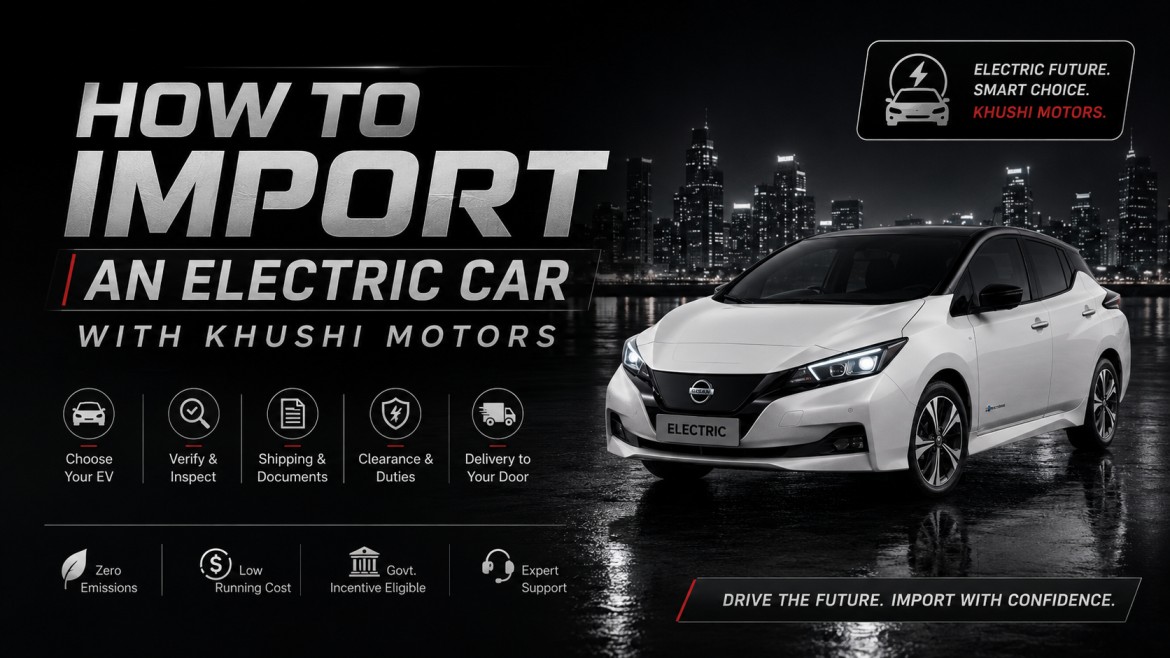
Fuel prices in Kenya are not getting any cheaper. More Kenyans are now seriously looking at electric cars as a smarter long-term choice. If you have been wondering how to import an electric car, the answer is simpler than most people expect.
Khushi Motors has been helping Kenyan buyers import quality vehicles directly from Japan since 2009. We are proud KCCI award winners and over the years we have built a process that takes the stress out of importing. You tell us what you want and we handle the rest from the Japanese auction house all the way to your driveway in Kenya.
We primarily serve the Kenyan market and we also extend our import services across East Africa including Uganda and Tanzania.
Why More Kenyans Are Switching to Electric Cars in 2026
The shift toward electric vehicles in Kenya is real and it is growing fast. Petrol prices in kenya have been sitting between KES 210 and KES 235 per litre. For someone driving 2000 kilometres a month that is a very heavy fuel bill every single month.
Electric cars run on electricity which costs a fraction of what petrol does. Charging a mid-range electric car for a full week in Nairobi can cost as little as KES 1500 depending on your electricity tariff. That difference adds up very quickly over a year.
The Kenyan government has also been supportive of EV adoption. Import duty relief on electric vehicles has been introduced which brings the total landed cost closer to what you would pay for a petrol car. Maintenance costs are also much lower because electric cars have far fewer moving parts. No engine oil changes, no timing belts, no exhaust repairs. Your servicing bill drops significantly.
For anyone thinking about the long-term picture, electric cars are one of the smartest financial decisions you can make right now in Kenya.
What Types of Electric Cars Can You Import Through Khushi Motors?
This is something we want to be very clear about. Khushi Motors imports all types of electric vehicles from Japan. Whether you are looking for a compact city car, a spacious family SUV, a plug-in hybrid or a fully battery electric vehicle we can source it for you.
Japan is one of the best markets in the world for quality used electric cars. Japanese vehicles come with detailed service histories, strict pre-export inspections and excellent maintenance records. The auction grading system in Japan is transparent and we share the full auction sheet with you before any purchase is confirmed.
We do not limit you to one or two models. Our job is to find the right electric car that matches your budget, your driving needs and your lifestyle in Kenya. You can also check cheapest electric cars for more budget clear details.
How Much Does It Cost to Import an Electric Car in Kenya?
This is the most important question for most buyers and we believe in giving you real honest numbers. The total cost depends on the car model, the year of manufacture and the exchange rate at the time of purchase. Here is a realistic cost breakdown for a standard used electric car imported from Japan in 2026.
| Cost Component | Estimated Amount (KES) |
| Car Purchase Price at Japan Auction | 650,000 to 950,000 |
| Freight and Marine Insurance | 120,000 to 160,000 |
| Import Duty (25% of CIF value) | 185,000 to 270,000 |
| Excise Duty (reduced rate for EVs) | 0 to 90,000 |
| VAT (16% of dutiable value) | 150,000 to 215,000 |
| KEBS Pre-Export Verification Fee | 25,000 to 35,000 |
| NTSA Registration and Inspection | 15,000 to 25,000 |
| Port Handling and Clearing Agent Fees | 45,000 to 65,000 |
| Total Estimated Landed Cost | 1,190,000 to 1,810,000 |
One thing worth knowing is that electric vehicles in Kenya currently attract a lower excise duty rate compared to petrol cars. This is part of the government's push toward cleaner vehicles and it makes a real difference to your final cost.
Exchange rates between the Japanese Yen and the Kenya Shilling also affect the purchase price. Our team monitors the market and advises you on the best time to buy when possible.
How the Import Process Works: Step by Step
Many people feel nervous about importing a car because they think the process is complicated. It is not. Let us walk you through every stage so you understand exactly what happens from the moment you contact us to the moment your car arrives.
Step 1: Tell Us What You Are Looking For
Share your budget, your preferred car type and any specific requirements. We listen carefully and shortlist the best options available at Japanese auctions that match your needs.
Step 2: We Source the Car at Auction in Japan
We use our established network of Japanese auction houses to bid on the right car for you. Every car comes with a full auction inspection sheet which we share with you. We only recommend cars that meet our quality standards.
Step 3: Payment and Purchase Confirmation
Once you approve the car you make payment. We send you full purchase documentation including the auction sheet so you have complete visibility.
Step 4: Shipping From Japan to Mombasa
The car is loaded onto a vessel and shipped to the Port of Mombasa. We handle the shipping booking and send you regular updates on the vessel departure date and estimated arrival.
Step 5: Port Clearance at Mombasa
When the vessel arrives, our clearing agents manage all the paperwork at the port. This includes the Import Declaration Form, customs valuation and duty payment.
Step 6: KEBS and NTSA Inspection
Your car goes through the Kenya Bureau of Standards inspection followed by the NTSA roadworthiness check. We guide you through both processes and make sure everything is in order.
Step 7: Your Car Is Ready for Handover
Once all clearances are complete your car is delivered to you in Keny or you collect it from our yard. Simple as that. For Further detail you can check how to import cars from japan.
Documents You Will Need to Import an Electric Car
The paperwork involved in importing a car can seem overwhelming at first. The good news is that most of these documents are straightforward and we help you get everything organised from the start.
| Document | Purpose | Who Provides It |
| KRA PIN Certificate | Your tax identification for customs | You (via KRA portal) |
| National ID or Passport | Proof of identity | You |
| Import Declaration Form (IDF) | Official customs declaration | Your clearing agent |
| KEBS Pre-Export Verification Certificate | Confirms car meets Kenya standards | Japan inspection agent |
| Japanese Export Certificate | Confirms car legally deregistered in Japan | Japan seller |
| Marine Insurance Certificate | Covers the car during shipping | Arranged by Khushi Motors |
| Proof of Payment | Bank transfer records for purchase | You (from your bank) |
We guide you on exactly which documents you need to prepare so nothing is missed and there are no delays at the port.
How Long Does the Whole Process Take?
We always give our clients an honest timeline because we believe you deserve to plan properly. There is no single fixed date because shipping schedules and port clearance times can vary. But here is what a typical import looks like.
| Stage | Estimated Time |
| Car selection and auction purchase in Japan | 1 to 3 weeks |
| Car preparation and vessel loading | 1 to 2 weeks |
| Shipping from Japan to Mombasa | 4 to 6 weeks |
| Port clearance and duty payment | 1 to 2 weeks |
| KEBS inspection | 3 to 5 working days |
| NTSA registration and inspection | 3 to 5 working days |
| Total Realistic Timeline | 8 to 14 weeks |
Plan for two to three months from the day you place your order to the day your car is ready. We send you updates at every stage so you always know exactly where your car is.
Electric Car vs Petrol Car — Which One Makes More Sense for You?
This is a fair and important question. Not every buyer should automatically go electric. Here is an honest side by side comparison based on real Kenya market conditions in 2026.
| Factor | Electric Car | Petrol Car |
| Monthly Running Cost | KES 3,000 to 6,000 | KES 18,000 to 28,000 |
| Annual Maintenance Cost | KES 20,000 to 40,000 | KES 60,000 to 120,000 |
| Import Duty Kenya 2026 | Lower with government exemptions | Standard duty rates |
| Driving Range Per Full Charge or Tank | 350 to 500 km | 500 to 700 km |
| Charging or Fuel Access in Kenya | Growing infrastructure in Nairobi | Petrol stations widely available |
| Resale Value Trend | Rising as demand grows | Gradually declining |
| Best Suited For | City driving and short to medium distances | Long distance and rural areas |
If you drive mainly within Nairobi and have access to home or office charging an electric car will save you a very significant amount of money every month. If you regularly drive long distances into areas without charging infrastructure a plug-in hybrid is a smarter choice for now.
The charging network in Nairobi is expanding every year. More malls, office parks and residential estates are installing chargers. The direction of travel is clearly in favour of electric vehicles.
Why Thousands of Buyers Trust Khushi Motors
There are many dealers who offer to import cars. What sets Khushi Motors apart is something that cannot be faked: experience and a proven track record.
We have been doing this since 2009. That is more than 15 years of working with Japanese auctions, navigating shipping logistics, handling Mombasa port clearance and understanding exactly what Kenyan buyers need. We have seen currency swings, shipping delays and policy changes. We know how to handle every situation.
Our KCCI award is a reflection of the trust that thousands of buyers and the broader business community have placed in us. It is not a title we take lightly.
We are also fully transparent. We show you the auction sheet, the full inspection report and the complete cost breakdown before you commit to anything. No hidden charges and no surprises at the port.
If you are ready to start the process our team is here to help you find the right electric car from Japan.
Frequently Asked Questions
How do I import an electric car in Kenya with Khushi Motors?
Contact the Khushi Motors team with your budget and preferred vehicle type. We source the car from Japanese auctions, handle shipping to Mombasa and manage port clearance, KEBS inspection and NTSA registration on your behalf. The full process takes between 8 and 14 weeks from start to finish.
How much does it cost to import an electric car in Kenya?
The total landed cost for a used electric car imported from Japan typically falls between KES 1,190,000 and KES 1,810,000 in 2026. This covers the purchase price, freight, import duty, excise duty, VAT, KEBS fees and NTSA registration. Electric vehicles attract a lower excise duty rate compared to petrol cars in Kenya.
What documents are needed to import an electric car in Kenya?
You will need your KRA PIN certificate, your national ID or passport and proof of payment. The clearing agent handles the Import Declaration Form. The Japan side documents include the KEBS pre-export verification certificate and the Japanese export certificate. Khushi Motors arranges the marine insurance on your behalf.
Which electric cars can I import through Khushi Motors in Kenya?
Khushi Motors imports all types of electric vehicles from Japan including compact city cars, family SUVs, plug-in hybrids and fully battery electric vehicles. We are not limited to specific models. Our team sources the right car based on your budget, your driving needs and your lifestyle requirements in Kenya.
How long does it take to import an electric car through Khushi Motors in Kenya?
The realistic total timeline is 8 to 14 weeks. This includes 1 to 3 weeks for the Japan auction purchase, 4 to 6 weeks for shipping to Mombasa and 2 to 3 weeks for port clearance, KEBS inspection and NTSA registration. Khushi Motors keeps you updated at every stage of the process.

Brian Otieno
Vehicle Import & Logistics Specialist
Brian specializes in vehicle sourcing from Japan and oversees the import process from auctions to final delivery. He writes detailed guides explaining shipping procedures, customs documentation, taxes, and vehicle import regulations across East Africa.
Ready to Find Your Perfect Car?
Browse our extensive inventory of quality Japanese used cars or contact our team for personalized assistance.