Subaru Forester Price in Kenya - Complete 2026 Guide
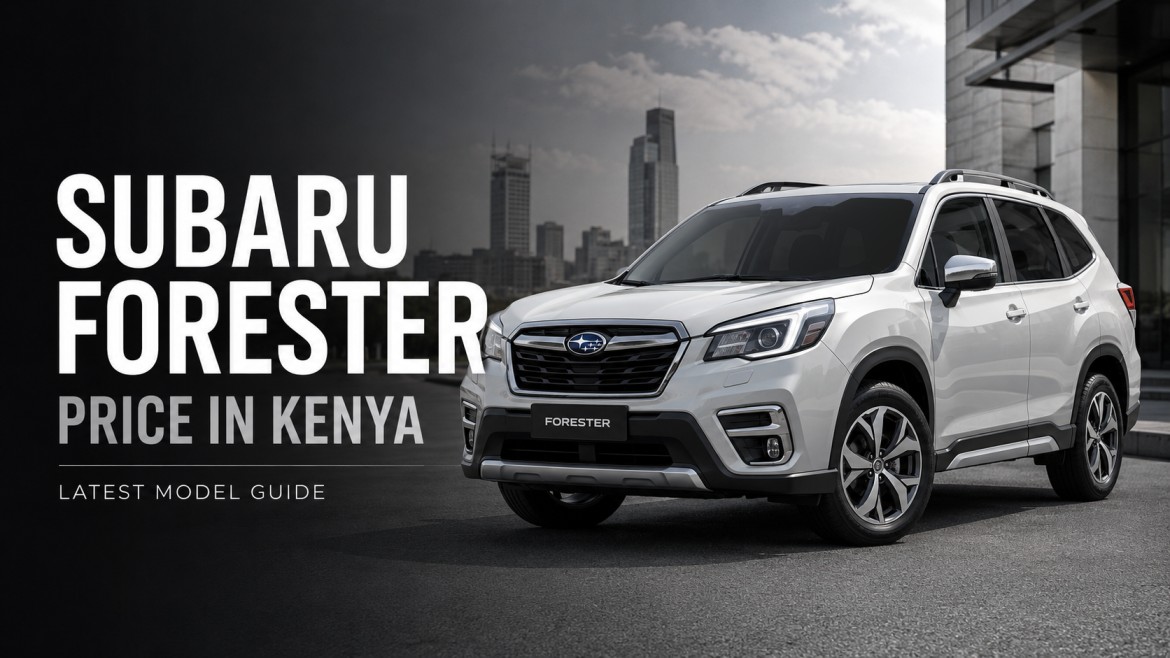
A used Subaru Forester in Kenya typically costs anywhere from about KES 900,000 for an older second generation model to over KES 4.2 million for a recent, low mileage import. Where a particular car falls in that range comes down to its model year, mileage, grade, engine and overall condition. Khushi Motors has been sourcing and selling quality Japanese used cars since 2009 and the company has since gone on to become a KNCCI Award Winner, a reflection of the trust it has built with car buyers across the country.
This guide walks through everything that shapes Forester pricing in Kenya, generation by generation, engine by engine. You will also find a breakdown of trim levels, a realistic look at what importing your own unit involves, and a side by side comparison against rivals like the Toyota Harrier and Mazda CX 5. By the end, you should have a clear sense of what a fair price looks like before you commit to buying.
What You Can Expect to Pay
Below is a general price guide based on typical listings in Nairobi and Mombasa. These figures are estimates only. Always confirm current stock pricing directly with a dealer such as Khushi Motors, since exchange rates and import costs shift often.
| Generation | Model Years | Estimated Price in Kenya (KES) |
| First Generation (SF) | 1998 to 2002 | Rarely imported due to age limit rules |
| Second Generation (SG) | 2003 to 2008 | 900,000 to 1.3 million |
| Third Generation (SH) | 2009 to 2013 | 1.2 million to 1.8 million |
| Fourth Generation (SJ) | 2014 to 2018 | 1.8 million to 2.6 million |
| Fifth Generation (SK) | 2019 to 2024 | 2.8 million to 4.2 million |
| Sixth Generation (SL) | 2025 to Present | New arrival, price on request |
Seven factors move the price up or down on any given unit.
- Model year. Newer units cost more because they carry fresh technology and longer usable life.
- Mileage. Low mileage Japanese imports hold their value better than high mileage local units.
- Grade. Auction grade from Japan tells you the true condition before shipping.
- Engine. Turbo XT models are priced higher than standard non turbo versions.
- Condition. Accident history and rust lower the price sharply.
- Import costs. Shipping, duty and clearing fees are built into the final price.
- Exchange rates. A weaker shilling against the yen raises landed cost across the board.
A Look Through the Years
Every Forester generation tells a slightly different story and knowing which one you are looking at helps you judge whether the asking price is fair. Here is what changed over the years and what it means for a buyer in Kenya today.
First Generation, 1998 to 2002
Subaru's first Forester borrowed its bones from the Impreza, giving it car like manners wrapped in a taller, wagon style body. A 2.0 litre flat four engine and full time all wheel drive were fitted from day one. Very few of these have any business being on Kenyan roads today, since they fall outside the country's import age window, and most surviving units are old local stock kept alive by hobbyists rather than daily commuters.
Second Generation, 2003 to 2008
The second Forester rounded off the styling and freed up more cabin space. This is also where things got interesting for enthusiasts, since Subaru slotted in a turbocharged XT variant and, for the Japanese domestic market only, a handful of STi bred versions. It still drove more like a raised hatchback than a bulky SUV. Import age rules now push most of these out of reach for fresh shipments, so what remains locally tends to carry higher mileage.
Third Generation, 2009 to 2013
Here the Forester finally looked and felt like a real SUV. Subaru stretched the wheelbase, opened up rear legroom and softened the ride with revised suspension. This is one of the more common generations on Kenyan roads, and for good reason. It offers genuine family space at a price well below what a fourth generation unit commands.
Fourth Generation, 2014 to 2018
This is arguably the generation that put the Forester on the map for safety conscious buyers, since it introduced Eye-Sight, Subaru's camera based driver assist system, alongside a smoother CVT gearbox. Shoppers could still pick the turbo XT for extra punch or stick with the naturally aspirated engine for lower running costs. It tends to be the sweet spot at Khushi Motors, offering modern conveniences without the price tag of a newer import.
Fifth Generation, 2019 to 2024
Subaru moved this generation onto its new global platform, which made the whole car stiffer and quieter. The turbo option disappeared here, with Subaru betting instead on a refined 2.0 litre boxer engine paired with more standardized safety kit. Certain overseas markets also picked up a mild hybrid e Boxer variant. Expect to pay a premium for these, since they represent the newest widely available stock in Kenya right now.
Sixth Generation, 2025 onward
The newest Forester lands with a stiffer body, a noticeably quieter cabin and fresh styling inside and out, alongside hybrid power in some markets. The cabin tech takes a big step forward too, headlined by an available 11.6 inch portrait touchscreen. Very few units have reached Kenyan shores so far, so early adopters should expect to pay closer to import cost until more stock filters through.
Engine Choices and How They Drive
The engine you choose affects fuel economy, running cost and how the car feels to drive. Here is a simple comparison of the main engines found in Kenya.
| Engine | Power | Fuel Economy | Best For |
| 2.0 Petrol Non Turbo | About 148 hp | 13 to 15 km per litre | City driving and low running costs |
| 2.5 Petrol Non Turbo | About 170 hp | 11 to 13 km per litre | Family use with more highway power |
| 2.0 Turbo XT | About 240 hp | 9 to 11 km per litre | Drivers who want quicker acceleration |
| Hybrid (select markets) | Combined output varies | 15 km per litre and above | Buyers who prioritise fuel savings |
All Forester engines pair with Subaru's Symmetrical All Wheel Drive, so grip stays strong on wet tarmac and light off road tracks. The non turbo engines are simpler to maintain and cheaper on fuel, while the turbo XT rewards drivers who want more power for overtaking on the highway.
Trim Levels Compared
Trim level changes comfort, technology and styling more than it changes the core mechanicals. Here is what separates each one.
| Trim | Key Features |
| Base | Symmetrical AWD, EyeSight Driver Assist, LED headlights, dual 7 inch touchscreens |
| Premium | Adds panoramic moonroof, keyless entry, power driver seat, heated front seats |
| Sport | 19 inch bronze alloy wheels, dark exterior trim, water repellent upholstery, enhanced X Mode |
| Wilderness | 9.2 inches of ground clearance, all terrain tires, rugged body cladding |
| Limited | Leather trimmed seats, 11.6 inch touchscreen, power rear liftgate, 18 inch alloys |
| Touring | Perforated leather, ventilated front seats, heated rear seats and steering wheel |
Most units sold in Kenya are Base or Premium trim because they offer strong value. Sport and Wilderness trims are harder to find but appeal to buyers who want a more rugged look or better off road ability.
Why Buyers Choose Khushi Motors
Khushi Motors regularly stocks third, fourth and fifth generation units in Non Turbo and XT configurations. Every car goes through a thorough quality check before it reaches the yard. Buyers across Nairobi and Mombasa choose Khushi Motors for several reasons.
- Direct Japanese imports sourced from trusted auction houses.
- A wide selection of Forester generations, trims and engine options.
- Trusted since 2009, with a long track record in the Kenyan market.
- KNCCI Award Winner status that reflects consistent customer trust.
- Quality inspections carried out before every sale.
- Nationwide assistance for delivery, registration and after sale support.
You can browse current stock on the Khushi Motors or view the full range of used cars available in Kenya in the inventory section.
Bringing One In Yourself
Some buyers prefer to import a Forester directly rather than buy an already landed unit. Here is the realistic process from start to finish.
- Vehicle selection. Choose the generation, grade and mileage that fit your budget.
- Auction purchase. The car is bought at a Japanese auction using a verified auction sheet.
- Shipping. The unit is loaded and shipped by sea, usually taking four to six weeks to reach Mombasa.
- Marine insurance. This protects the vehicle against damage or loss during transit.
- Inspection. A pre export inspection such as QISJ confirms roadworthiness before shipping.
- Taxes and import duty. Kenya Revenue Authority calculates duty based on the CIF value, which includes cost, insurance and freight.
- Port clearance. Documents are processed at Mombasa port before the car is released.
- Registration. The vehicle is registered and number plates are issued locally.
A typical import takes about eight to twelve weeks from auction purchase to registration. For example, a buyer in Nairobi who selects a fourth generation Forester at a Japanese auction in January can realistically expect to be driving the car by March, assuming no delays at port clearance.
Weighing the Pros and Cons
| Pros | Cons |
| Strong Symmetrical All Wheel Drive grip | Boxer engine servicing can cost more than rivals |
| High ground clearance for Kenyan roads | Turbo XT models need premium fuel and careful upkeep |
| Reliable boxer engine when well maintained | Fewer dealer service points outside major towns |
| Roomy interior for a compact SUV | Resale value drops faster on older non turbo units |
| Eye-Sight safety tech on newer models | Spare parts for rare trims can take time to source |
How It Stacks Up Against Rivals
Buyers often cross shop the Forester against other popular SUVs in Kenya. Here is how it compares.
| Model | Est. Price (KES) | Engine | AWD | Ground Clearance | Best For |
| Subaru Forester | 1.2m to 4.2m | 2.0L to 2.0L Turbo | Standard | 220mm | All weather grip and safety |
| Toyota Harrier | 1.8m to 4.5m | 2.0L Hybrid/Petrol | Optional | 180mm | Comfort and resale value |
| Mazda CX 5 | 1.7m to 3.8m | 2.0L to 2.5L | Optional | 213mm | Driving feel and design |
| Honda CR V | 1.9m to 4.0m | 1.5L Turbo/2.4L | Optional | 208mm | Interior space and reliability |
| Nissan X Trail | 1.5m to 3.5m | 2.0L to 2.5L | Optional | 210mm | Budget friendly family SUV |
The Forester stands out because AWD comes as standard across the range, not as an optional extra. This makes it a dependable choice for Kenyan roads that mix tarmac, murram and rainy season conditions. Buyers focused purely on comfort and resale value may still lean toward the Harrier.
Frequently Asked Questions
What are the common issues reported by Subaru Forester owners in Kenya?
Owners occasionally report head gasket wear on older boxer engines, worn CV joints, and costly turbo repairs on XT models. Regular oil changes and using a trusted mechanic familiar with Subaru engines helps prevent most of these problems. A pre purchase inspection at Khushi Motors reduces this risk significantly.
What is the average fuel consumption for the 2.0L variant?
The 2.0 litre non turbo Forester averages between 13 and 15 kilometres per litre in mixed city and highway driving. Fuel economy depends on driving style, traffic conditions and tire pressure. The turbo XT version uses more fuel, averaging closer to 9 to 11 kilometres per litre.
How much does a Subaru Forester cost in the Kenyan market?
Prices typically range from KES 900,000 for an older second generation unit to over KES 4.2 million for a recent fifth generation model. The final price depends on model year, mileage, grade, engine type and condition. Always confirm current pricing directly with a trusted dealer.
Where can I buy a Subaru Forester in Kenya?
You can buy a genuine, inspected Subaru Forester from Khushi Motors, a trusted Japanese used car dealer and KNCCI Award Winner serving customers since 2009. Browse current stock through the used cars available in Kenya inventory or visit the showroom in person for a test drive.
What factors affect Subaru Forester pricing the most?
Model year and mileage have the biggest impact on price, followed by engine type and overall condition. Import costs and exchange rate movements also shift landed prices over time. Buyers should compare several units before deciding, since two Foresters of the same year can differ in price by hundreds of thousands of shillings.

David Mwangi
Senior Automotive Consultant
David Mwangi has over 10 years of experience in the automotive industry. He specializes in used vehicle evaluations, car buying advice and ownership guidance. His content helps buyers choose reliable vehicles based on budget, fuel economy and long-term maintenance costs.
Ready to Find Your Perfect Car?
Browse our extensive inventory of quality Japanese used cars or contact our team for personalized assistance.