Honda Vezel Price in Kenya - Models & Prices
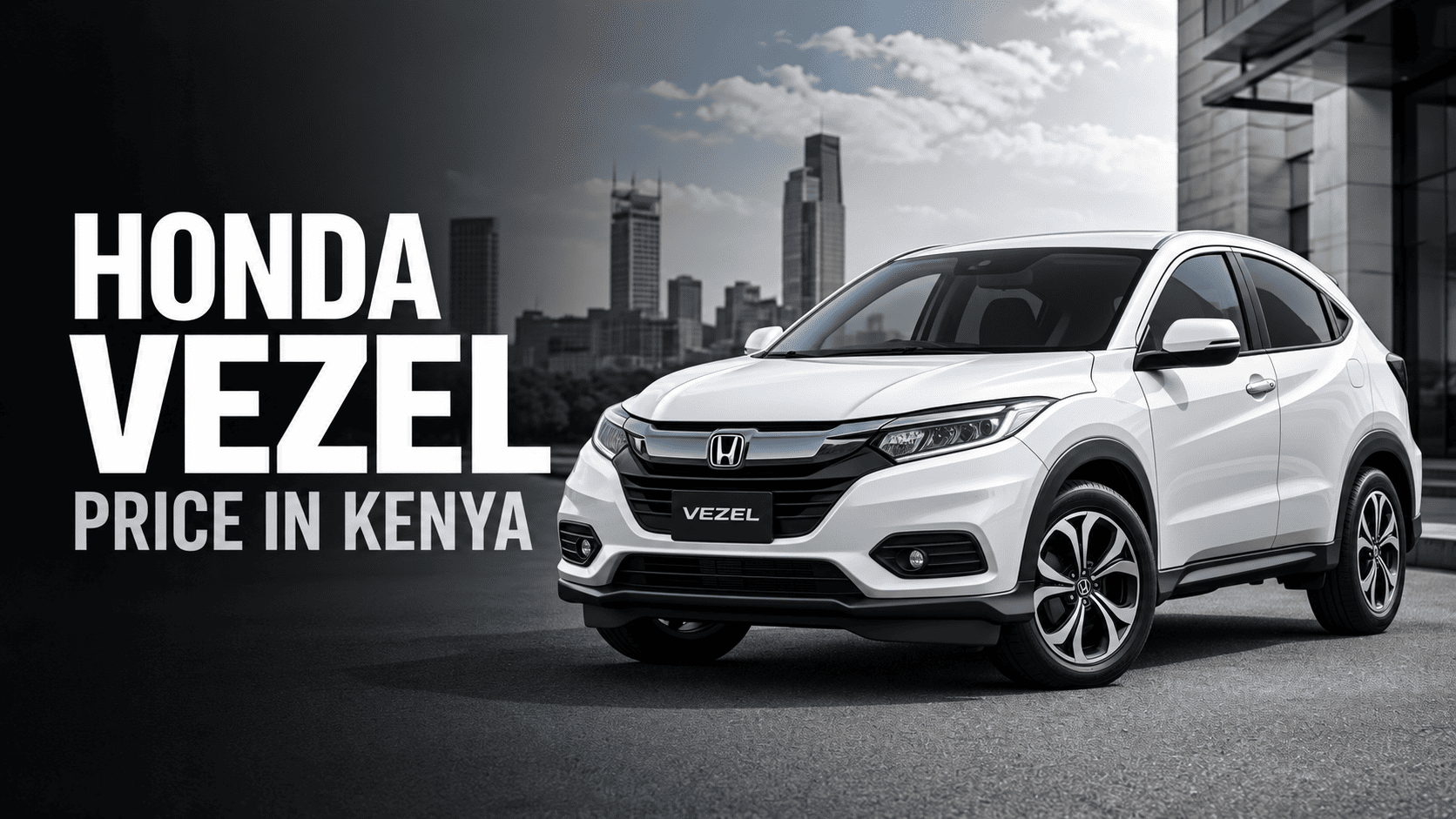
How much does a Honda Vezel cost in Kenya right now? That is the question and here is the honest answer. There is no single price. In 2026, the price of a used Honda Vezel in Kenya ranges from around 1.6 million shillings for an older petrol model to nearly 4.8 million shillings for a decent and low-mileage hybrid.
Two Vezel models might look almost identical in a photo yet carry very different price tags. One factor that influences the price more than any other is the car's year of manufacture. Mileage is the next most important factor. Then it depends on the vehicle's condition, its Japanese auction grade, the engine type (petrol or hybrid), and the exchange rate and taxes at the time of import. Once you understand these points, the pricing will make perfect sense to you.
We will also be upfront about an important rule that many buyers are unaware of. Kenya only allows the import of vehicles that are up to eight years old. This time is calculated from the date of the car's first registration, not its year of manufacture. This means a fresh import must be a 2018 model or newer. Older Vezel models still legally drive on Kenyan roads and are available for sale, but they were imported previously and are now being resold locally, rather than being recent imports.
Khushi Motors has been importing used cars from Japan to Kenya since 2009 and has earned recognition along the way, including an award from the KNCCI. This type of experience is exactly what underpins the figures and recommendations you are about to read.
Honda Vezel Price in Kenya
Here is a simple table based on what is actually listed and selling in the Kenyan market in 2026. Treat these as realistic ranges, not fixed prices. A dealer near you may quote slightly above or below this depending on the exact unit.
| Model Year | Fuel Type | Typical Price Range in Kenya (KES) |
| 2014 to 2016 (locally used stock) | Petrol | 1.6 million to 2.1 million |
| 2014 to 2016 (locally used stock) | Hybrid | 1.9 million to 2.4 million |
| 2017 to 2018 | Petrol | 1.9 million to 2.4 million |
| 2017 to 2018 | Hybrid | 2.2 million to 2.8 million |
| 2019 to 2020 | Petrol | 2.3 million to 2.9 million |
| 2019 to 2020 | Hybrid | 2.6 million to 3.4 million |
| 2021 to 2022 | Hybrid (e:HEV) | 3.2 million to 4.0 million |
| 2023 and newer | Hybrid (e:HEV) | 3.8 million to 4.8 million |
Why the big gap between the top and bottom of that table. Think of it this way. A 2015 Vezel has already done years of work. It has more mileage, older tyres and an interior that has seen more sun and dust. A 2023 Vezel is barely used and has the newest safety features and still has most of its life ahead. You are not just paying for the badge. You are paying for how much of the car's useful life is left.
| Quick tip: When two Vezels are the same year, always ask for the mileage and the Japan auction sheet first. These two numbers explain most of the price gap and even more than the colour or the extra features. |
A few things push a specific unit's price up or down within these ranges.
- Mileage. A unit under 60,000 kilometres will usually cost more than one with over 100,000 kilometres, even in the same year.
- Auction grade. A grade 4 or higher car with no accident history costs more than a grade 3.5 car.
- Engine type. Hybrid Vezels almost always cost a bit more than petrol Vezels of the same year. Buyers pay extra for the fuel savings.
- Trim and features. Leather seats, alloy rims, parking sensors and safety technology all add to the asking price.
- Import costs. The shilling to yen exchange rate, shipping rates from Japan and current Kenya Revenue Authority tax rules all affect what a dealer paid to land the car, which shapes the final price tag.
For example, a 2018 petrol Vezel with 90,000 kilometres and a clean sheet will usually sell for less than a 2020 hybrid Vezel with 45,000 kilometres, even though both are common in Kenya today. That is not random pricing. That is age, mileage and fuel type doing their normal work.
Before you settle on the Vezel, it also helps to see how it fits among other Honda cars in Kenya, so you know you are choosing the right Honda model for your needs and not just the most talked about one.
Honda Vezel Model Years and Generations
Not every Vezel is the same car with a different sticker. Honda changed the design, engine tuning and technology over the years. Here is what you are actually looking at, in plain terms.
First Generation Honda Vezel (2013 to 2018)
This is where the Vezel story began, launched in Japan in December 2013. It brought Honda's small SUV look with a sloped roofline and a boxy useful boot. In Kenya you will see this generation using chassis codes such as RU1 and RU2 for petrol models, and RU3 and RU4 for hybrid models with all wheel drive on some hybrid grades.
Petrol versions use a 1.5 litre engine with a CVT automatic gearbox which is simple and easy to maintain. Hybrid versions pair that 1.5 litre engine with an electric motor for real fuel savings, especially in stop start driving. As these cars age, expect normal things like suspension bushes, shocks and, on hybrids, battery condition to need attention sooner. This generation suits a buyer on a tighter budget who does not mind an older style dashboard. If you are checking a Honda Vezel 2018 in Kenya, expect it near the top of this generation's range since it is one of the last before the facelift.
Facelift Model (2018 to 2021)
In 2018, Honda gave the Vezel a facelift. New front and rear styling, refreshed trims, and on many units, Honda Sensing driver assistance came in, things like automatic braking and lane assist on higher grades. The engines stayed close to before, but the cabin feels a step more modern and safer. A Honda Vezel 2019 or 2020 price in Kenya usually sits above similar mileage pre facelift cars because of this upgrade.
Second Generation Honda Vezel (2021 to present)
April 2021 brought a full redesign, new platform, new look, new tech. Petrol models use an updated 1.5 litre engine. Hybrid models moved to Honda's e:HEV system which leans more on the electric motor at low speed. So the car feels smoother and quieter around town. The dashboard is more modern, the touchscreen is bigger on many grades, and the cabin is better insulated from road noise. This is the newest Vezel you will find used in Kenya.
Honda Vezel Engine and Hybrid Options
Two engine choices reach the Kenyan market, and picking between them is really about how you drive.
| Feature | Petrol Vezel | Hybrid Vezel |
| Engine | 1.5L i VTEC petrol | 1.5L petrol plus electric motor |
| Transmission | CVT automatic | CVT automatic or single speed on e:HEV |
| Best for | Longer highway drives, lower purchase price | Nairobi traffic, daily commuting |
| Fuel use in traffic | Moderate | Strong savings |
| Fuel use on highway | Good | Similar to petrol, sometimes slightly better |
| Import tax treatment | Standard excise duty | Lower excise duty rate |
| Typical resale price | Slightly lower for same year | Slightly higher for same year |
The petrol Vezel uses a naturally aspirated 1.5 litre engine. It is not fast, but it is more than enough for city roads and a comfortable cruiser on the highway. The CVT gearbox is smooth, and as long as it gets serviced with the correct fluid on schedule, it lasts well.
The hybrid Vezel adds an electric motor and a small battery. On first generation cars this is Honda's Sport Hybrid setup. On second generation cars it is the e:HEV system, where the electric motor does most of the work at lower speeds and the petrol engine mostly acts like a generator, only joining in properly once you are moving fast. This is why hybrids shine in Nairobi traffic. Less wasted fuel while you crawl along Waiyaki Way or Mombasa Road at rush hour.
So what does this mean for your fuel bill in real life. In heavy city traffic, a hybrid Vezel usually saves you the most, since the electric motor handles a lot of that slow, stop start driving. On a long highway trip, say Nairobi to Mombasa or Nairobi to Kisumu, petrol and hybrid models end up closer in fuel use, because the engine is doing most of the cruising work either way. On rough or uneven roads, common in many parts of Kenya outside the main towns, fuel type does not matter as much as tyre condition and how carefully you drive over the bumps.
One honest note. Real fuel economy always depends on your traffic, your driving style, your tyre pressure, your air conditioning use and how well the car has been serviced. Japanese test figures are a useful starting point, but they are not a guarantee for your daily commute.
Honda Vezel Features and Specifications
Here is what actually matters day to day, not just what looks good on a spec sheet.
- Space. The boot is practical and folds flat for bigger loads, useful if you carry shopping, luggage or work equipment often.
- Ground clearance. Higher than a normal sedan, which helps on Kenyan roads that are not always smooth, though this is not a car built for serious off roading.
- Seating. Five seats, which fits a small family or a daily commuter comfortably.
- Safety. Later models and higher grades offer more airbags and driver assistance features. Always check what your specific unit actually has, since this varies a lot by year and trim.
- Screen and audio. Older units have basic setups. Newer imports often have larger touchscreens and reverse cameras, handy for tighter Nairobi parking.
- Air conditioning. Usually strong, but always test it before you buy, since compressor repairs are not cheap.
- Visibility. Good all around thanks to the tall glass area, which helps with judging distances in traffic.
- Ride comfort. Soft enough for daily driving, stable enough for the highway.
These are the things that actually shape your daily experience of owning a Vezel, far more than any number on a brochure.
What to Check Before Buying a Honda Vezel in Kenya
This is the part many buyers rush, and it is the part that saves you the most money later. Here is a simple checklist to walk through before you hand over any cash.
| What to Check | Why It Matters |
| Mileage and auction sheet | Confirms real usage and independent condition grading from Japan |
| Accident history and chassis | Uneven panel gaps or repair marks can signal past damage |
| Engine and hybrid battery health | Hybrid battery condition affects future repair costs |
| Transmission smoothness | Rough or jerky shifting can mean expensive CVT problems ahead |
| Suspension and brakes | Noise over bumps or soft brakes point to upcoming repair bills |
| Tyres and cooling system | Uneven wear or leaks are early warning signs |
| Air conditioning and electricals | Confirm windows, lights and AC all work before you commit |
| Interior wear versus stated mileage | Mismatched wear can mean the odometer reading is not accurate |
| Service history | Shows how consistently the car has been maintained |
| Import documents and logbook | Confirms the car is legally cleared and correctly registered |
As the car ages, a few common wear points show up. Suspension bushes and shocks get tired. On hybrid models, the battery can slowly lose some capacity over time. This does not happen to every car, and a well kept older Vezel can honestly outlast a poorly kept newer one. The good news is that Vezel spare parts are not hard to find in Kenya, through both genuine Honda channels and the wider Japanese import parts market, so running costs stay manageable compared to some rarer SUV brands.
Let us put this into a real scenario. Say you commute daily in Nairobi and occasionally drive to the coast or upcountry for family visits. You have two honest choices. Go for an older petrol Vezel from around 2016, save on the purchase price, and budget a bit more for parts sooner. Or stretch your budget for a 2021 hybrid with lower mileage, pay more upfront, and enjoy stronger fuel savings and fewer near term repairs. Neither choice is wrong. It comes down to what matters more to you right now, a lower purchase price or lower running costs over the next few years.
How to Import a Honda Vezel From Japan to Kenya
Bringing a Vezel in from Japan yourself is possible, and knowing the steps helps even if you let a dealer handle it for you.
- Choose your vehicle. This can be from live Japanese auction stock or from dealer stock already sitting in Japan waiting for export.
- Inspect before you commit. Check the auction sheet grade, mileage and any noted defects, ideally with photos or a physical inspection.
- Confirm the 8 year rule. As of 2026, Kenya only allows import of vehicles first registered within the last eight years. That means your Vezel needs to be a 2018 model or newer to clear customs.
- Purchase and arrange shipping. This usually happens by roll on roll off carrier, along with marine insurance to cover the journey.
- Understand the CIF value. CIF simply means Cost, Insurance and Freight, the total value used as the base for calculating Kenyan import taxes.
- Clear customs at Mombasa. Kenya Revenue Authority compares your CIF value against its own Current Retail Selling Price database for that model, and uses whichever figure is higher to calculate tax.
- Pay duty, excise, IDF, RDL and VAT. Import duty sits around 25 percent. Excise duty is a big one to know about. Hybrid vehicles attract a lower excise rate, around 10 percent, while petrol vehicles pay a higher rate depending on engine size. Then a 2.5 percent Import Declaration Fee, a 2 percent Railway Development Levy, and 16 percent VAT are added on top, with VAT calculated on the combined value after duty and excise.
- Complete roadworthiness inspection and registration. Once cleared, the vehicle is inspected and registered with a Kenyan number plate before delivery. For more details you can also check the process of importing cars from japan to kenya.
Here is why choosing hybrid can genuinely save you money at import stage, not just at the pump. Because hybrids are taxed at a lower excise rate than petrol only vehicles of similar size, the total tax bill on a hybrid Vezel is often noticeably lower than on a petrol model of the same customs value. This is one reason hybrid Vezels are so common in the Kenyan market today.
As a simple example, imagine a hybrid Vezel with a CIF value of 1.4 million shillings. Duty, the lower hybrid excise rate, IDF, RDL and VAT stack on top of that CIF figure, and total taxes on a car in this range often land somewhere around 60 to 80 percent of the CIF value, though this depends on the exact CRSP figure KRA applies and the exchange rate on the day. These numbers move with government policy, so always confirm current rates with KRA or a trusted dealer before you commit, rather than relying on last year's figures. Many Kenyan buyers simply prefer to let an established dealer manage this whole process, since it removes a lot of guesswork and paperwork risk.
Honda Vezel Financing Options in Kenya
Most buyers do not pay the full price in one lump sum, and that is completely normal. Here are your usual choices.
- Bank vehicle financing. A bank funds part of the purchase, you repay over an agreed period with interest.
- Asset financing. Similar to bank loans, often offered through specialist vehicle lenders.
- Dealer financing. Some dealers offer financing directly, which can simplify the paperwork since it is handled alongside the sale.
- Deposit plus financing. Pay a larger deposit yourself and finance only the remaining balance, which lowers your total interest paid.
- Personal savings. The simplest route if your budget allows it, with no interest at all.
Before you sign anything, compare these numbers side by side.
| What to Compare | Why It Matters |
| Deposit required | Affects how much you need upfront |
| Interest rate | Directly changes your total repayment |
| Loan period | A longer term lowers monthly cost but raises total interest paid |
| Monthly payment | Must comfortably fit your income |
| Total repayment | Look at the full amount paid over the loan, not just the monthly figure |
| Insurance requirement | Most lenders require comprehensive cover for financed cars |
| Eligibility | Proof of income and credit history are usually required |
Honda Vezel vs Similar SUVs in Kenya
If you are still deciding between the Vezel and something else, here is a fair comparison based on what is actually common in Kenya's used car market.
| Vehicle | Typical Price (KES) | Engine | Fuel Economy | Seating | AWD | Best For |
| Honda Vezel | 1.9m to 4.0m | 1.5L petrol/hybrid | Very good, esp. hybrid | 5 | Select grades | Urban commuting, fuel savings |
| Toyota C HR | 2.0m to 3.6m | 1.8L hybrid | Very good | 5 | Limited | Style plus hybrid economy |
| Toyota Harrier | 2.6m to 4.8m | 2.0L petrol/hybrid | Good | 5 | Yes | Larger, premium SUV |
| Mazda CX 5 | 2.3m to 4.0m | 2.0L to 2.5L petrol | Moderate | 5 | Yes | Driving feel |
| Honda CR V | 2.4m to 4.5m | 1.5L turbo/2.0L hybrid | Good | 5 | Yes | Families needing space |
| Nissan X Trail | 2.1m to 3.9m | 2.0L to 2.5L petrol/hybrid | Moderate to good | 5 to 7 | Yes | Extra seating |
The Vezel wins on being easy to park, easy to drive daily and genuinely light on fuel, especially the hybrid. If you need a bigger boot, a third row of seats or more space for a growing family, the Harrier, CR V or X Trail might suit you better even at a higher price. There is no single winner here. It really depends on how many people you carry and what kind of driving you do most.
Honda Vezel Pros and Cons
| Pros | Cons |
| Strong fuel economy, especially hybrid models | Boot and rear space smaller than bigger SUVs |
| Compact size, easy to drive and park in Nairobi | Hybrid battery health needs checking before purchase |
| Comfortable daily ride | Ground clearance not built for serious off roading |
| Good resale value due to steady demand | Specialist hybrid repairs can cost more if needed |
| Reliable Japanese build quality when maintained well | Older units feel dated inside compared to newer rivals |
One more point worth knowing. Honda Vezel resale value in Kenya tends to hold up well, because demand for small, fuel efficient SUVs keeps growing among Kenyan buyers. That matters if you plan to sell or upgrade in a few years.
Honda Vezel Available From Khushi Motors
If you want a Honda Vezel for sale in Kenya from people who actually understand Japanese imports, this is where Khushi Motors comes in. The business has been sourcing and selling Japanese used vehicles since 2009, which means the team has watched Vezel pricing and demand shift across many market cycles, not just read about it.
Every vehicle is sourced directly from Japan, checked for condition before it is listed, and sold with clear documentation, so you know exactly what you are paying for. This matters more than most buyers realise. A used Vezel is only as good as its maintenance history and paperwork, and a dealer that cuts corners on either can leave you with surprise costs down the road.
Khushi Motors is also a KNCCI Award Winner, recognition tied to years of consistent, honest business practice in the Japanese used car trade. If you want to see what is currently available in the Honda Vezel Collection, the team can walk you through which model year and specification actually fits your budget and daily needs, along with help on financing and registration. Even if you end up buying elsewhere, knowing what a trustworthy dealer looks like, clear documentation, honest condition disclosure and real support after the sale, is one of the most useful things you can carry into this purchase.
Frequently Asked Questions
What are the Honda Vezel fuel efficiency ratings in Kenya?
Fuel efficiency depends on the model year, whether it is petrol or hybrid, traffic, load and driving style. Hybrid models perform best in stop start Nairobi traffic. On the highway, petrol and hybrid models come closer together. Real world figures vary between individual cars depending on condition.
What are the common mechanical problems reported for the Honda Vezel?
Older Vezels may show worn suspension bushes, tired shocks or, on hybrids, reduced battery capacity over time. Not every unit develops these issues. A well maintained car often performs better than a newer one with poor history, so always inspect the specific vehicle before buying.
What are the best dealerships for Honda Vezel in Nairobi?
A trustworthy dealer is defined by evidence, not promises. Look for clear vehicle history, honest condition disclosure, complete import documentation, transparent pricing and real support after the sale. Khushi Motors, serving customers since 2009, is one option Kenyan buyers commonly consider for these reasons.
What is the average fuel efficiency of the 1.5L hybrid Honda Vezel in urban settings?
In typical Mombasa traffic, a well maintained 1.5L hybrid Vezel usually returns strong fuel economy compared to the petrol version, since the electric motor handles much of the slow driving. Exact figures shift with traffic density, condition and driving habits, so treat any single number as an estimate.
What is the typical market price of a used 2018 Honda Vezel in Kenya?
A 2018 Honda Vezel in Kenya typically falls between 1.9 million and 2.8 million shillings depending on fuel type, mileage and condition. Hybrid units usually sit toward the higher end. Lower mileage, a clean auction grade and complete documentation can push the price above this range.
How does the Honda Vezel compare with other compact SUVs available in Kenya?
Compared to the Toyota C HR, Mazda CX 5, Honda CR V and Nissan X Trail, the Vezel stands out for its compact size, strong fuel economy and wide availability in the market. Buyers wanting more interior space or off road capability may prefer a larger alternative instead.

David Mwangi
Senior Automotive Consultant
David Mwangi has over 10 years of experience in the automotive industry. He specializes in used vehicle evaluations, car buying advice and ownership guidance. His content helps buyers choose reliable vehicles based on budget, fuel economy and long-term maintenance costs.
Ready to Find Your Perfect Car?
Browse our extensive inventory of quality Japanese used cars or contact our team for personalized assistance.