Nissan Car Types and Models Available in Kenya
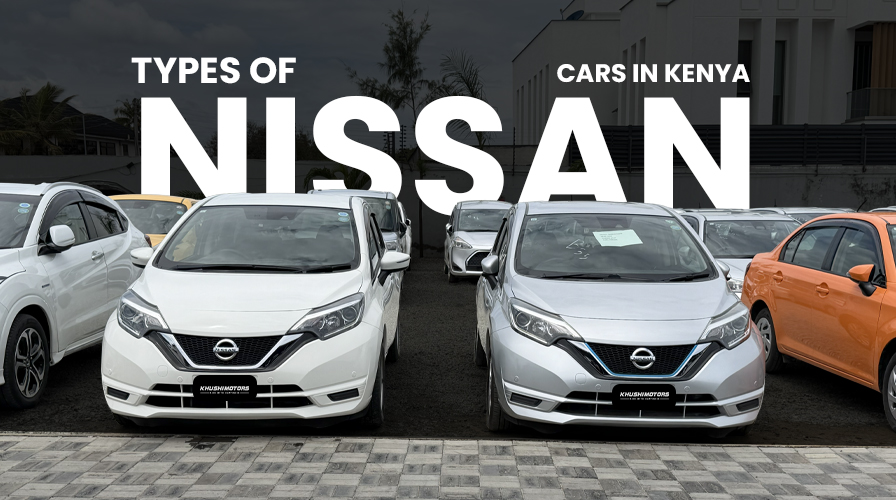
Nissan cars come in seven main types: SUVs and crossovers, sedans, hatchbacks, station wagons, pickups, vans, and hybrid or electric cars. The most common names on Kenyan roads include the Note, X Trail, Serena, Navara and Patrol and many of them arrive as used imports from Japan.
Prices cover a wide spread. A small March or Wingroad can sell for under KSh 1 million, a used Note e POWER sits around KSh 1.3 million to 1.8 million, and a Patrol can cost well over KSh 10 million. Fuel use varies just as much, from more than 25 km/L on a Note e POWER in lab tests to about 4 to 6 km/L for a Patrol V8 in Nairobi traffic.
Below, every Nissan you are likely to find in Kenya has its own stats table covering engine, seats, price range, fuel use and whether it can still be imported under the 2026 rules. The figures were checked in October and November 2026.
What Types of Nissan Cars Are Available in Kenya?
Seven groups cover almost every Nissan on Kenyan roads. Many of these cars are bought used, either as cars already in the country or as fresh imports from Japan.
| Category | Nissan models | Typical price range (KSh) | Main use |
| SUV and crossover | Magnite, Qashqai, Terra, Patrol, X Trail, Kicks, Juke | 0.9M (Juke) to 25M (Patrol) | Family travel, commuting, upcountry trips |
| Sedan | Sylphy, Latio (Sunny), Teana, Skyline | 0.7M to 3.8M | Daily commuting, ride hailing, highway comfort |
| Hatchback and small car | Note, March, Tiida, Cube, Dayz | 0.55M to 1.8M | Town driving and easy parking |
| Station wagon and light van | Wingroad, AD Van | 0.38M to 1.2M | Extra cargo space at a low price |
| Pickup and light truck | Navara Single Cab, Navara Double Cab, NP300 Hardbody, Atlas | 1.9M to 6M | Farm work, trade and rough roads |
| Van and family carrier | NV350 Urvan (Caravan), Serena, NV200 Vanette, Elgrand | 0.5M to 2.7M | School runs, tours, deliveries, matatu work |
| Hybrid and electric | Note e POWER, Serena e POWER, Kicks e POWER, X Trail e POWER, LEAF | 1.3M to 3M | Lower fuel bills or no fuel at all |
Used price ranges are Estimated prices, not final selling prices.
Nissan SUVs and Crossovers in Kenya
SUVs are the most popular Nissan type and they come in three sizes. Small crossovers like the Magnite and Kicks are built like cars and suit town driving. Family SUVs like the X Trail and Qashqai add space and height. The Terra and Patrol sit on strong truck frames and can handle real off road use.
One point is worth knowing before you buy. Not every Nissan SUV has four wheel drive (4WD), and many X Trails are front wheel drive. If you plan to drive on muddy murram roads during the rains, confirm the drive type on the exact car.
Nissan Magnite
The Magnite is one of the most affordable Nissan SUV. It is a compact crossover with a raised seat, a small turbo engine and a modern dashboard. It comes in Acenta and Acenta Plus grades, and the Acenta Plus adds six airbags, Apple CarPlay, Android Auto and hill start assist.
Its size is both its strength and its limit. It parks easily in Nairobi CBD and sips fuel, but the rear seat suits children better than three adults, and the boot fills up quickly on a family trip.
| Stat | Nissan Magnite |
| Type | Compact crossover |
| Engine | 1.0 litre three cylinder turbo petrol, 74 kW and 152 Nm |
| Gearbox | CVT automatic |
| Seats | 5 |
| Price range | KSh 2.7M (Acenta CVT) to KSh 3.025M (Acenta Plus CVT) (2021 prices); current prices may be higher |
| Fuel use | 5.27 L/100 km claimed, about 19 km/L |
| Best for | First time buyers, young couples and city commuters |
| Watch out for | Small boot and rear seat; not built for rough off road tracks |
Nissan Qashqai
The Qashqai is the family step up from the Magnite. The current model uses a 1.3 litre turbo engine, and its 504 litre boot swallows school bags, shopping and luggage with room to spare. Fold the rear seats and the space grows to 1,593 litres.
Most owners keep it on tarmac. It rides well on the Thika Superhighway and Mombasa Road, but it is not meant for deep ruts or river crossings.
| Stat | Nissan Qashqai |
| Type | Compact family crossover |
| Engine | Current model: 1.3 litre turbo petrol, 110 kW and 250 Nm. Used J11: 1.2 litre turbo or 2.0 litre petrol |
| Gearbox | 7 speed Xtronic automatic (current model) |
| Seats | 5 |
| Boot | 504 litres, 1,593 litres with rear seats folded |
| Price range | About KSh 2.6M to 3.2M (2019 J11 model, market price) |
| Fuel use | Current model: 5.3 L/100 km, about 18.9 km/L (manufacturer figure). Used J11 1.2 turbo: about 16 km/L |
| Best for | Small families who drive mostly on tarmac |
| Watch out for | A road car, not designed for heavy off road use |
Nissan Terra
The Terra shares its frame and diesel engine with the Navara pickup, which makes it far tougher than any crossover. It has three rows and seven seats, arranged so that each row sits a little higher than the one in front and giving rear passengers a better view.
It suits the kind of driving many families do: weekdays in town, weekends upcountry on murram roads. NGOs and field teams also like it for the same reason. The trade off is cost. It is a large, heavy vehicle, and fuel, tyres and insurance cost more than on a crossover.
| Stat | Nissan Terra |
| Type | Seven seat SUV on a truck frame |
| Engine | 2.5 litre turbo diesel, 140 kW and 450 Nm |
| Gearbox | 6 speed manual or 7 speed automatic |
| Drive | 4WD on the SE manual; confirm for other grades |
| Seats | 7 (three rows) |
| Price range | KSh 7.67M (2.5 SE 4WD manual) to KSh 8.83M (2.5 LE automatic) (2022 prices, including VAT and duties) |
| Fuel use | No official figure published for Kenyan grades |
| Best for | Large families, NGOs and frequent upcountry travel |
| Watch out for | Higher running costs than a crossover |
Nissan Patrol
The Patrol is Nissan's flagship and the biggest SUV. It combines a large V8, a full size cabin and serious off road hardware.it is a common sight with government offices, safari operators and buyers who want the top of the range.
| Stat | Nissan Patrol |
| Type | Large flagship SUV |
| Engine | 5.6 litre V8 petrol (Y62) |
| Gearbox | 7 speed automatic |
| Seats | 7 or 8, depending on version |
| Price range | About KSh 12M to 18M for 2018 to 2022 models, and up to about KSh 25M for the latest model |
| Fuel use | About 4 to 6 km/L in Nairobi traffic |
| Best for | Long trips, tough terrain and buyers who want maximum space and power |
| Watch out for | Very high fuel, insurance and servicing costs |
Nissan X Trail
The X Trail is one of the most popular SUV. Most units are the T32 model built from 2013 to 2022. It hits a sweet spot for families: enough space, a higher seat for potholes and speed bumps, and running costs well below a Terra or Patrol.
Buyers should look closely at three things. First, confirm whether the car is 2WD or 4WD. Second, check whether it has two or three rows of seats, as only some versions seat seven. Third, test the CVT gearbox on a proper drive, because a worn CVT is expensive to fix.
| Stat | Nissan X Trail |
| Type | Midsize family SUV |
| Engine | T32: 2.0 litre petrol or 2.0 litre hybrid. Newer T33: e POWER |
| Gearbox | CVT automatic |
| Drive | 2WD or 4WD, depending on the car |
| Seats | 5, or 7 on some versions |
| Price range | Typical asking range KSh 2.15M to 2.8M. Median asking price: 2014 about KSh 1.86M, 2016 about KSh 2.6M, 2018 about KSh 2.5M, 2019 about KSh 2.85M |
| Fuel use | T32 20X 2WD petrol: 16.4 km/L (JC08). X Trail e POWER: 18.9 km/L urban (Nissan Philippines) |
| Best for | Families who need space and a higher ride for rough roads |
| Watch out for | CVT condition; confirm 2WD or 4WD and the seat count |
Nissan Kicks
The Kicks is a small crossover comes only with e POWER in Japan. It drives like an electric car while running on petrol, which makes it very easy on fuel in stop and go traffic. It suits commuters who want a crossover look without paying for a larger SUV.
| Stat | Nissan Kicks |
| Type | Small crossover |
| Engine | e POWER (1.2 litre petrol engine charges a battery; electric motor drives the wheels) |
| Gearbox | Single speed (electric drive) |
| Seats | 5 |
| Price range | About KSh 3.0M (one 2021 unit with 20,000 km listed at KSh 2,999,000) |
| Fuel use | 23 km/L for the newer Kicks e POWER 2WD (WLTC, Japan) |
| Best for | City commuters who want a crossover with low fuel bills |
| Watch out for | Few units on sale; limited e POWER experience at some garages |
Nissan Juke
The Juke is a small crossover with a bold shape that people either love or dislike. It sits higher than a Note, but the cabin is tighter than it looks: the rear seat suits children and the boot is small. Most Jukes are the first generation (F15), sold in Japan until 2020.
| Stat | Nissan Juke |
| Type | Small crossover (not a regular hatchback) |
| Engine | 1.5 litre petrol or 1.6 litre turbo petrol (Japanese F15 model) |
| Gearbox | CVT automatic |
| Seats | 5 |
| Price range | Typical asking range KSh 1.4M to 1.875M, median about KSh 1.8M; older 2010 to 2012 cars from about KSh 920,000 |
| Fuel use | 13.4 to 18.0 km/L (JC08, Japan, across engines) |
| Best for | Singles and couples who like its styling |
| Watch out for | Small boot and rear seats; condition matters more than the badge on older cars |
Nissan Sedans in Kenya
A sedan has a closed boot behind the rear seats. Many buyers prefer one for highway trips because it feels settled at speed and keeps luggage hidden. Most Nissan sedans are used imports from Japan.
Nissan Sylphy
The Sylphy is a practical, roomy sedan. The rear seat has generous legroom for its class, which is why it shows up often in ride hailing fleets and with office commuters. The Japanese version (B17) uses a 1.8 litre petrol engine with a CVT.
| Stat | Nissan Sylphy |
| Type | Compact to midsize sedan |
| Engine | 1.8 litre petrol (Japanese B17 model) |
| Gearbox | CVT automatic |
| Seats | 5 |
| Price range | About KSh 1.45M to 1.75M for 2016 and 2017 cars |
| Fuel use | 15.6 km/L (JC08, Japan) |
| Best for | Families, office commuters and ride hailing drivers |
| Watch out for | Fewer newer units available from Japan |
Nissan Latio (Sunny)
The Latio is the Japanese version of the Sunny, a simple small sedan with a light 1.2 litre engine. It is a good fit for buyers who want a sedan shape on a hatchback budget.
| Stat | Nissan Latio (Sunny) |
| Type | Small sedan |
| Engine | 1.2 litre three cylinder petrol |
| Gearbox | CVT automatic |
| Seats | 5 |
| Price range | About KSh 1.18M to 1.3M |
| Fuel use | 22.6 km/L (JC08, Japan) |
| Best for | Budget buyers who want a sedan |
| Watch out for | Sold in Japan only until 2016, so all units are older |
Nissan Teana
The Teana is the larger, softer riding sedan in the Nissan range. It is built for comfort on long drives with a quiet cabin and a supportive front passenger seat. The last Japanese model (L33) ran from 2014 to 2020 with a 2.5 litre engine.
| Stat | Nissan Teana |
| Type | Midsize sedan |
| Engine | 2.5 litre petrol (L33); 2.0 litre on some imports |
| Gearbox | CVT automatic |
| Seats | 5 |
| Price range | Used 2015 to 2020: about KSh 1.1M to 2.9M. Import estimate for a 2020 car: about KSh 3.3M (2.0 XL) to KSh 3.8M (2.5 XV) |
| Fuel use | 14.4 km/L (JC08, Japan, 2.5 litre) |
| Best for | Buyers who want comfort on long highway trips |
| Watch out for | Larger engine means higher fuel use than a Sylphy |
Nissan Skyline
The Skyline is a premium rear wheel drive sedan for drivers who want performance and a more upmarket cabin.
| Stat | Nissan Skyline |
| Type | Premium sports sedan |
| Engine | V37 (2014 onwards): 3.5 litre V6 hybrid or 2.0 litre turbo petrol |
| Seats | 5 |
| Price range | About KSh 690,000 (older units) to KSh 2.7M |
| Fuel use | 3.5 hybrid: 16.8 to 17.8 km/L. 2.0 turbo: 13.0 km/L (JC08, Japan) |
| Best for | Enthusiasts who want power and a premium feel |
| Watch out for | Higher servicing and parts costs |
Nissan Hatchbacks and Small Cars in Kenya
A hatchback has a rear door that lifts up to reveal the boot. It is short, light and easy to park which is exactly what most drivers need. Fold the rear seats and it carries more than you would expect.
Nissan Note
The Note is one of the most common Nissans. It has excellent rear legroom for a small car and low running costs. Older Notes use a 1.2 litre petrol engine. Many newer imports use e POWER, which cuts fuel use sharply in slow traffic.
| Stat | Nissan Note |
| Type | Small hatchback |
| Engine | 1.2 litre petrol, 1.2 litre supercharged petrol, or e POWER |
| Gearbox | CVT (petrol) or single speed electric drive (e POWER) |
| Seats | 5 |
| Price range | Typical asking range KSh 1.025M to 1.625M, median about KSh 1.35M. Median by year: 2016 KSh 1.1M, 2018 KSh 1.275M, 2019 KSh 1.45M, 2020 KSh 1.7M, 2021 KSh 1.83M |
| Fuel use, official | 1.2 supercharged: 25.2 km/L (JC08). e POWER 2016: 34.0 to 37.2 km/L (JC08). e POWER E13: 28.4 km/L 2WD, 23.8 km/L 4WD (WLTC) |
| Fuel use, real driving | About 19 to 20 km/L for the E13 2WD, per a Japanese report |
| Best for | Commuters, small families and ride hailing drivers |
| Watch out for | Check e POWER battery health and warning lights |
Nissan March
The March is smaller than the Note and works best for one or two people who drive mostly in town. It is cheap to buy and easy to park, but the rear seat and boot are tight.
| Stat | Nissan March |
| Type | Small city hatchback |
| Engine | 1.2 litre three cylinder petrol |
| Gearbox | CVT automatic |
| Seats | 5 (tight in the back) |
| Price range | About KSh 550,000 (2012) to KSh 990,000 (2017); median asking price about KSh 650,000 |
| Fuel use | 21.4 km/L (JC08, Japan, 1.2 S) |
| Best for | Single drivers and couples on a budget |
| Watch out for | Limited rear seat and boot space |
Nissan Tiida
The Tiida offers a roomy, comfortable cabin for very little money. Japan stopped selling it in 2012, so every unit is an older car and a full inspection is a must.
| Stat | Nissan Tiida |
| Type | Hatchback |
| Engine | 1.5 or 1.8 litre petrol |
| Seats | 5 |
| Price range | About KSh 550,000 to KSh 680,000 |
| Fuel use | 14.2 to 18 km/L (JC08, Japan) |
| Best for | Buyers on a tight budget who want comfort |
| Watch out for | Age related wear on suspension, rubber parts and the gearbox |
Nissan Cube
The Cube has a tall, boxy body that gives lots of headroom and a clear view of the road. It is a practical town car with a personality of its own.
| Stat | Nissan Cube |
| Type | Boxy small car |
| Engine | 1.5 litre petrol |
| Gearbox | CVT automatic |
| Seats | 5 |
| Price range | About KSh 800,000 to KSh 1.05M |
| Fuel use | 19.0 km/L (JC08, Japan) |
| Best for | City drivers who want headroom or carry tall items |
| Watch out for | Sold in Japan until 2020, so newer stock is limited |
Nissan Dayz
The Dayz is a kei car, a class of very small Japanese cars with engines of 660 cc. It is the cheapest Nissan to buy and run, but it is built for short town trips, not highway driving with a full load.
| Stat | Nissan Dayz |
| Type | Kei car |
| Engine | 660 cc three cylinder petrol (turbo on some grades) |
| Gearbox | CVT automatic |
| Seats | 4 |
| Price range | About KSh 650,000 to KSh 930,000 |
| Fuel use | 21.8 to 25.8 km/L (JC08, Japan, 2013 launch figures) |
| Best for | Short town trips at the lowest buying price |
| Watch out for | Not suited to long highway drives or heavy loads |
Nissan Station Wagons and Light Vans
A station wagon is a sedan with a longer roof and a large load area at the back. It gives more space than a hatchback without the height or cost of an SUV, which makes it popular with small traders.
Nissan Wingroad
The Wingroad is a budget wagon with a big boot. It is common in Kenya because it is cheap to buy and parts are easy to find. Japan stopped selling it in 2018, so all units are older cars.
| Stat | Nissan Wingroad |
| Type | Station wagon |
| Engine | 1.5 litre petrol (1.8 on some older units) |
| Gearbox | CVT or automatic |
| Seats | 5 |
| Price range | About KSh 380,000 to KSh 1.2M; median asking price about KSh 650,000 |
| Fuel use | 20.0 km/L (10.15 mode, Japan, 1.5 litre); about 12.6 km/L reported by owners in real driving |
| Best for | Families and small traders who need a large boot |
| Watch out for | Age related wear; inspect carefully |
Nissan AD Van
The AD Van, known locally as the Advan, is a no frills work wagon with a flat load floor. It is a common choice for small delivery businesses.
| Stat | Nissan AD Van (Advan) |
| Type | Light commercial wagon |
| Engine | 1.5 or 1.6 litre petrol on most units |
| Seats | 2 to 5, depending on version |
| Price range | About KSh 550,000 to KSh 950,000 |
| Fuel use | No reliable figure found for units sold in Kenya |
| Best for | Deliveries and small businesses |
| Watch out for | Work vehicles often have hard lives; check mileage and service records |
Nissan Pickups and Light Trucks in Kenya
A pickup carries heavy loads and copes with bad roads far better than a car. In return, it rides harder when empty, is tougher to park in town and leaves cargo open to rain unless you fit a canopy.
Nissan Navara Single Cab and Double Cab
The Navara is Nissan's main pickup and comes in two body styles. The Single Cab has one row of seats and a long load bed for goods. The Double Cab has two rows and a shorter bed, so it can carry a work crew and their tools together.
Payload, towing capacity, ground clearance and 4WD all depend on the version. Never assume a Navara is 4WD; check the specification sheet for the exact grade.
| Stat | Navara Single Cab | Navara Double Cab |
| Type | Work pickup | Pickup for passengers and cargo |
| Engine | 2.5 litre turbo diesel on many grades; 2.5 litre petrol on some | 2.5 litre turbo diesel on many grades |
| Gearbox | 6 speed manual or 7 speed automatic | 6 speed manual or 7 speed automatic |
| Seats | 2 or 3 (one row) | 5 (two rows) |
| Price range | About KSh 4.5M to 6M | About KSh 4.5M to 6M |
| Fuel use | 8.1 L/100 km claimed, about 12.3 km/L; about 10.4 km/L measured on a launch drive | Same engine figures |
| Best for | Farmers, traders and contractors | Business owners and rural family travel |
Nissan NP300 Hardbody
The NP300 Hardbody was one of Nissan's best selling pickups, known for being simple and tough. Nissan in Africa has replaced it with the Navara, so today it is only found used.
Nissan Atlas
The Atlas is a light truck for businesses that need to carry more than a pickup can take. Before buying, check the registration class and the driving licence category it needs.
| Stat | Nissan Atlas |
| Type | Light truck |
| Engine | Diesel on most units |
| Seats | 3 |
| Price range | Around KSh 1.9M (one unit listed at KSh 1.89M) |
| Fuel use | No reliable figure found; depends on load |
| Best for | Businesses moving heavier loads |
| Watch out for | Licence class and commercial registration |
Nissan Vans and Family Carriers in Kenya
A passenger van has seats and windows for people. A commercial van, or panel van, is an empty box for goods. Seat counts differ between versions, so count the seats and check the logbook before you buy.
Nissan NV350 Urvan (Caravan)
The Urvan is the most common large Nissan van. It comes as a Panel van for cargo and a Minibus for passengers. In Japan the same van is called the NV350 Caravan.
| Stat | Nissan NV350 Urvan (Caravan) |
| Type | Large van, panel van or minibus |
| Engine | Petrol or diesel |
| Seats | Depends on version (panel van or minibus) |
| Cargo space | Up to 2.865 m long, 1.545 m wide and 1.350 m high (panel van) |
| Price range | From about KSh 480,000 for older units, median about KSh 1.74M; 2017 petrol units listed at KSh 1.89M to 2.65M |
| Fuel use | No official figure published; depends heavily on load |
| Best for | Schools, tour firms, matatu work and deliveries |
| Watch out for | Commercial use history; check mileage and suspension wear |
Nissan Serena
The Serena is a family minivan with sliding side doors, a favourite for school runs and big families. You will find three versions: regular petrol, S Hybrid (a mild hybrid) and e POWER. The e POWER versions save the most fuel in town.
| Stat | Nissan Serena |
| Type | Family minivan |
| Engine | 2.0 litre petrol, 2.0 litre S Hybrid, or e POWER |
| Seats | 7 or 8 |
| Price range | About KSh 1.15M (2014) to KSh 2.3M; median asking price about KSh 2.3M; 2017 hybrids about KSh 1.75M to 1.8M |
| Fuel use | C27 petrol: 15.0 km/L catalogue. C27 e POWER: 26.2 km/L (JC08). C28 e POWER: 18.4 to 20.6 km/L catalogue, about 13.7 km/L measured in real driving |
| Best for | Large families and school runs |
| Watch out for | Sliding door motors and hybrid system health |
Nissan NV200 Vanette
The NV200 is a compact van that is easy to drive in town. Small businesses use it for deliveries, and some owners fit seats and use it as a small people carrier.
| Stat | Nissan NV200 Vanette |
| Type | Compact van |
| Engine | 1.5 or 1.6 litre petrol |
| Seats | 2 to 5 (van); more in wagon versions |
| Price range | About KSh 1.49M to 1.68M for 2016 to 2018 units |
| Fuel use | No reliable figure found for units sold |
| Best for | Town deliveries and small businesses |
| Watch out for | Confirm whether it is registered as a van or a passenger vehicle |
Nissan Elgrand
The Elgrand is a large luxury minivan with plush seats and plenty of space. It suits families or hotels that want comfort for seven or eight people, but its big engines use more fuel than a Serena.
| Stat | Nissan Elgrand |
| Type | Large luxury minivan |
| Engine | 2.5 litre four cylinder or 3.5 litre V6 petrol |
| Gearbox | CVT automatic |
| Seats | 7 or 8 |
| Price range | Around KSh 2.7M (two units listed) |
| Fuel use | 9.0 to 10.8 km/L (JC08, Japan) |
| Best for | Families or hotels wanting premium passenger comfort |
| Watch out for | High fuel use, especially with the V6 |
Nissan Hybrid and Electric Cars in Kenya
Nissan uses four kinds of powertrain. A powertrain is the system that turns fuel or electricity into movement.
| Powertrain | How it works | Plug in? | Nissan examples |
| Petrol or diesel | The engine drives the wheels. | No | Magnite, Qashqai, Sylphy, Navara, older Note |
| S Hybrid (mild hybrid) | A small electric motor helps the petrol engine. It cannot drive the car alone. | No | Some Serena units |
| e POWER (series hybrid) | The petrol engine only charges a battery. An electric motor drives the wheels. | No | Note, Serena, Kicks, X Trail e POWER |
| Fully electric (EV) | A large battery runs the motor. There is no engine. | Yes | LEAF, Ariya |
How e POWER Works
e POWER sits between a regular hybrid and an electric car. You fill it with petrol like any other car, but the engine never turns the wheels. It only runs a generator that charges a battery, and an electric motor does the driving. That is why it feels smooth and quiet, and why it saves the most fuel in Nairobi stop and go traffic. Nissan first used it in the Note in Japan in 2016 and added it to the Serena in 2018.
Nissan LEAF
The LEAF is a fully electric hatchback. It makes sense for drivers who can charge at home or at work and who drive mostly within town. It has no fuel costs at all, but public charging in Kenya is still limited outside the main towns.
| Stat | Nissan LEAF |
| Type | Fully electric hatchback |
| Battery | 24 kWh or 30 kWh on first generation cars; 40 kWh or 62 kWh on the second generation |
| Range | First generation 24 kWh: 228 km (JC08). Second generation: depends on battery size and health |
| Seats | 5 |
| Price range | Around KSh 2.1M (one 2016 car with about 18,000 km listed at KSh 2,099,999) |
| Fuel use | None; runs on electricity |
| Best for | Short daily trips with home or workplace charging |
| Watch out for | Battery health; always get a battery report before buying |
Nissan also sells the Ariya electric SUV and cars like the Almera, Sentra and Altima in other markets. These are rare in Kenya, with no reliable local prices, so they are not covered in detail here.
When buying any used hybrid or electric Nissan, ask for a battery health report, use a garage with the right diagnostic tools and ask how long parts take to arrive.
Nissan Prices and Fuel Use in Kenya: Full Comparison
| Model | Type | Price range (KSh) | Fuel use |
| Magnite | Compact crossover | 2.7M to 3.025M (2021) | About 17 to 19 km/L |
| Qashqai | Family crossover | 2.6M to 3.2M | About 16 to 18.9 km/L |
| Terra | 7 seat SUV | 7.67M to 8.83M (2022) | Not published |
| Patrol | Large SUV | 12M to 25M | About 4 to 6 km/L in town |
| X Trail | Family SUV | 2.15M to 2.8M | 16.4 km/L (T32 petrol) |
| Kicks e POWER | Small crossover | About 3.0M | 23 km/L |
| Juke | Small crossover | 1.4M to 1.875M | 13.4 to 18.0 km/L |
| Sylphy | Sedan | 1.45M to 1.75M | 15.6 km/L |
| Latio (Sunny) | Small sedan | 1.18M to 1.3M | 22.6 km/L |
| Teana | Midsize sedan | 1.1M to 2.9M | 14.4 km/L |
| Skyline | Premium sedan | 0.69M to 2.7M | 13.0 to 17.8 km/L |
| Note | Hatchback | 1.025M to 1.625M (median 1.35M) | 25.2 to 37.2 km/L lab; about 19 to 20 km/L real (e POWER) |
| March | Small hatchback | 0.55M to 0.99M | 21.4 km/L |
| Tiida | Hatchback | 0.55M to 0.68M | 14.2 to 18 km/L |
| Cube | Small car | 0.8M to 1.05M | 19.0 km/L |
| Dayz | Kei car | 0.65M to 0.93M | 21.8 to 25.8 km/L |
| Wingroad | Station wagon | 0.38M to 1.2M | 20.0 km/L lab; about 12.6 km/L real |
| AD Van | Light van | 0.55M to 0.95M | Not confirmed |
| Navara | Pickup | 4.5M to 6M | About 10.4 to 12.3 km/L |
| Atlas | Light truck | About 1.9M | Not confirmed |
| NV350 Urvan | Van | Median 1.74M | Not published |
| Serena | Minivan | 1.15M to 2.3M | 15.0 to 26.2 km/L (lab) |
| NV200 | Compact van | 1.49M to 1.68M | Not confirmed |
| Elgrand | Luxury minivan | About 2.7M | 9.0 to 10.8 km/L |
| LEAF | Electric car | About 2.1M | Electric |
Which Nissan Should You Buy in Kenya?
The best Nissan for you depends on what you carry, where you drive and how much you can spend each month on fuel. Use this table as a starting point.
| Your situation | Nissan type to consider | Models to compare | What to look at |
| Lowest buying price for town use | Small hatchback or kei car | March, Dayz, Tiida | Condition, parts supply, price |
| Daily commuting with the lowest fuel bill | e POWER hatchback or crossover | Note e POWER, Kicks e POWER | Real fuel use, hybrid service |
| Ride hailing (Uber, Bolt) | Hatchback or sedan | Note e POWER, Sylphy, Latio | Fuel use, rear legroom, boot |
| Small family on tarmac | Sedan or compact crossover | Sylphy, Qashqai, Magnite | Safety, boot space, fuel use |
| Large family | Seven seat SUV or minivan | Terra, X Trail (3 row), Serena | Seat count, luggage space, running costs |
| Business deliveries | Van or wagon | NV200, AD Van, NV350 Urvan | Cargo space, operating costs |
| Farm, site or trade work | Pickup or light truck | Navara Single Cab, Atlas | Payload, 4WD, ground clearance |
| Rough rural roads | Strong SUV or pickup | Terra, Patrol, Navara Double Cab | 4WD, tyres, ground clearance |
A practical tip: two cars with the same name can be very different. A well kept 2017 Note will usually serve you better than a neglected 2019 one, so judge the car in front of you, not only the model.
Can You Import a Nissan from Japan to Kenya in 2026?
Yes, you can import a Nissan from Japan to Kenya as long as it meets the current age and standards rules. Since 1 January 2026, KEBS allows only right hand drive vehicles first registered on or after 1 January 2019. The car must also pass a pre export inspection in Japan before shipping.
This matters for price. Many of the cheaper ranges in this guide are for 2014 to 2018 cars that are already in Kenya. A fresh import today has to be a 2019 or newer car, so it will usually cost more than an older locally used unit. For more guide check how to import car from Japan to kenya.
Which Nissan Models Can Still Be Imported?
| Nissan model | Can it be imported in 2026? | Notes |
| Note (E12 and E13 e POWER) | Yes | 2019 and newer; most imports are e POWER |
| X Trail (T32 and T33) | Yes | T32 from 2019 to 2022; T33 e POWER from 2022 |
| Serena (C27 and C28) | Yes | Petrol, S Hybrid and e POWER versions |
| Kicks e POWER | Yes | Sold in Japan from 2020 |
| Dayz | Yes | Second generation from 2019 |
| March | Yes, limited | Sold in Japan until December 2022 |
| Elgrand, Skyline, LEAF, Caravan, AD Van | Yes | 2019 and newer units |
| Juke, Cube, Teana | Limited | Japanese sales ended in 2020, so only 2019 and 2020 units qualify |
| Wingroad, Tiida, Latio | No | Japanese sales ended before 2019; buy from the local used market |
How Khushi Motors Imports a Nissan for You
If the Nissan you want is not available in Kenya, Khushi Motors can import it from Japan for you. Khushi Motors is a Japanese used car dealership that has served customers since 2009 and is a KNCCI Award Winner.
The process is simple:
- Tell the team what you want. Share the model, year range, grade, colour, mileage limit and your budget.
- Review real options. The team finds cars that meet the 2026 import rules, and you go through each one's condition, mileage, grade and auction sheet before deciding.
- Get the full landed cost. Ask for the total, including the car price, shipping, duty, excise, VAT and registration, so you know the real number before you commit.
- Shipping and clearance. Once you approve a car, it goes through pre export inspection in Japan, ships to Mombasa and is cleared for registration.
You can also ask Khushi Motors which Nissan models are already in stock if you prefer to see a car in person. Contact the team.
What to Check Before Buying a Used Nissan in Kenya
Use this checklist on any used Nissan, whether it is a local car or a fresh import.
- Year of first registration. For imports, it must meet the KEBS age rule. For local cars, confirm the year on the logbook matches the car.
- Mileage and service history. Ask for service records and receipts. Very low mileage on an old car can be a warning sign.
- Accident damage. Look for uneven panel gaps, fresh paint, overspray on rubber seals and repaired chassis parts.
- Auction sheet. For Japanese imports, check the auction grade and inspector notes, and confirm the sheet is genuine.
- CVT or automatic gearbox. Most Nissans use a CVT. Test it on a proper drive and listen for whining or jerking.
- Hybrid or EV system. For e POWER, S Hybrid or LEAF models, check battery health and dashboard warning lights.
- Suspension, tyres, brakes and cooling. These parts work hard on roads and are expensive to replace all at once.
- Spare parts. Ask local suppliers about parts for that exact model and engine before you buy.
- Documents. Confirm import papers, duty payment, logbook and NTSA registration details.
- Total cost of ownership. Add the price, insurance, fuel, tyres and servicing to see what the car really costs each month. For more guide check how to transfer ownership.
How to Check a Nissan's Official Specifications
Nissan's official websites list the specifications for each model and grade, but they also show many models that are never sold in Kenya. A used import may have a different engine or features from the version you read about online, because it was built for the Japanese or UK market.
The safest way to confirm what you are buying is to check the chassis number, the auction sheet and the grade of the exact car. These tell you the real engine, drive type, trim level and year of manufacture.
Frequently Asked Questions
What are the different models available from Nissan in Kenya?
Nissan models include the Magnite, Qashqai, Terra, Patrol, Navara, NV350 Urvan, X Trail, Note, Serena, Sylphy, March, Juke, Kicks, Teana, Wingroad, NV200, Elgrand and LEAF. The Note, X Trail and Serena are the most common Japanese imports.
What types of sedans does Nissan offer?
Nissan sedans include the Sylphy, Latio (Sunny), Teana and Skyline. Other markets also get the Almera, Sentra and Altima. Buyers usually find Nissan sedans as used imports from Japan.
Which pickup trucks are made by Nissan?
Nissan's main pickup in Kenya is the Navara, available as a Single Cab and Double Cab with a 2.5 litre turbo diesel on many grades. The older NP300 Hardbody is now found used. Other markets also get the Frontier. Always confirm whether a specific unit has 4WD.
Which electric vehicles does Nissan currently offer?
Nissan's fully electric cars are the LEAF hatchback and the Ariya SUV, but neither is common in Kenya. The Note, Serena, Kicks and X Trail e POWER are hybrids, not electric cars. They run on petrol, and an electric motor drives the wheels.
Which Nissan uses the least fuel in Kenya?
The Note e POWER is the most fuel efficient common Nissan. It is rated at 28.4 to 37.2 km/L in Japanese lab tests, and Japanese owners report about 19 to 20 km/L in daily driving. The Kicks e POWER and Serena e POWER are also very economical.
Can I import a Nissan from Japan to Kenya?
Yes. Since January 2026, Kenya allows right hand drive cars first registered on or after 1 January 2019. Popular imports include the Note e POWER, X Trail and Serena. Khushi Motors can source and import a qualifying Nissan from Japan and give you the full landed cost first.

David Mwangi
Senior Automotive Consultant
David Mwangi has over 10 years of experience in the automotive industry. He specializes in used vehicle evaluations, car buying advice and ownership guidance. His content helps buyers choose reliable vehicles based on budget, fuel economy and long-term maintenance costs.
Ready to Find Your Perfect Car?
Browse our extensive inventory of quality Japanese used cars or contact our team for personalized assistance.